
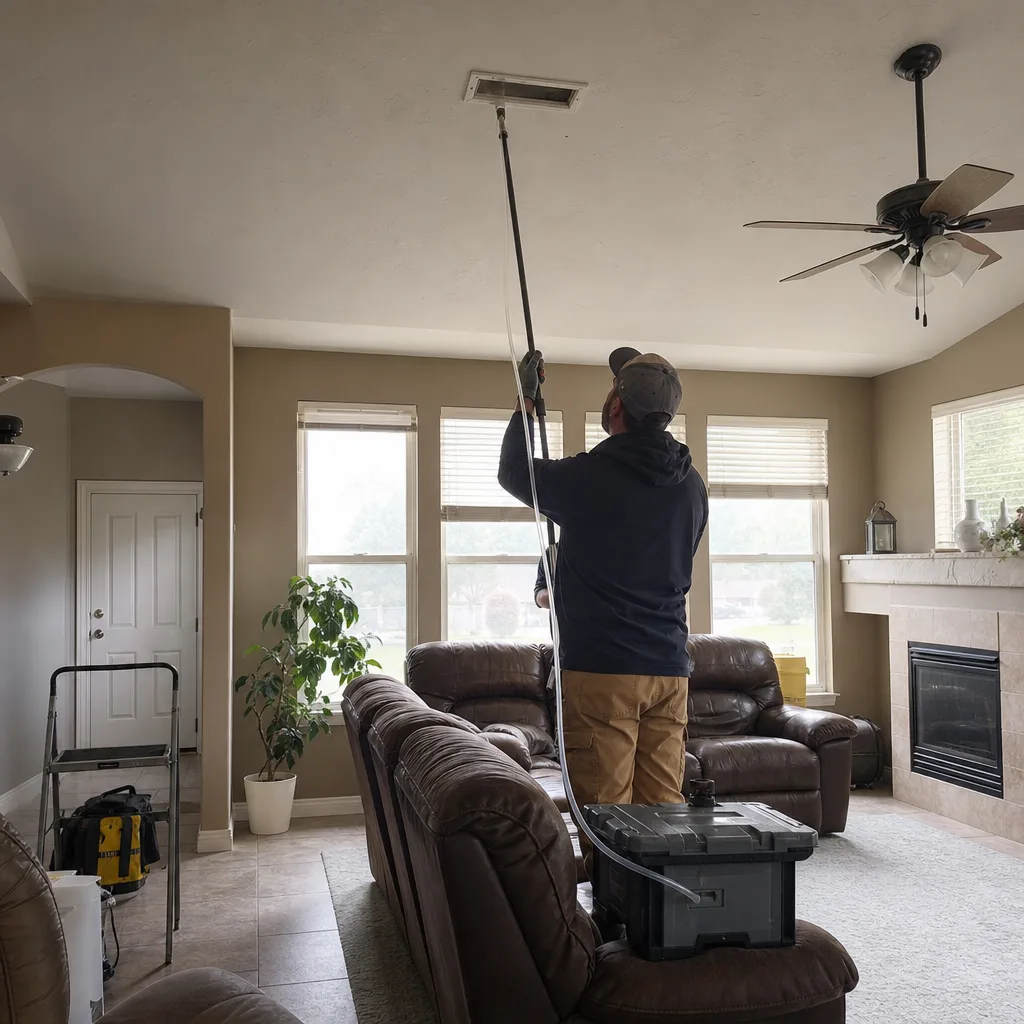
Last updated November 23, 2026
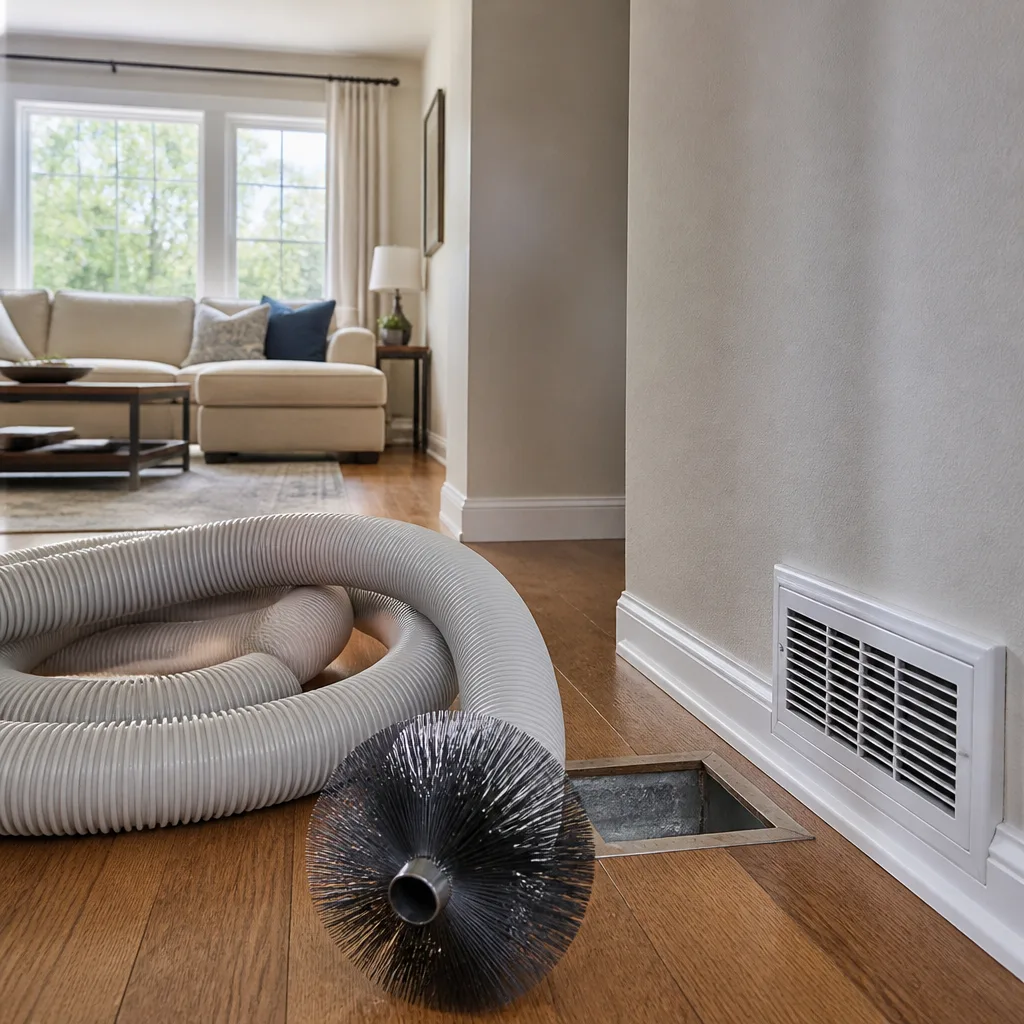 Whole-home duct cleaning
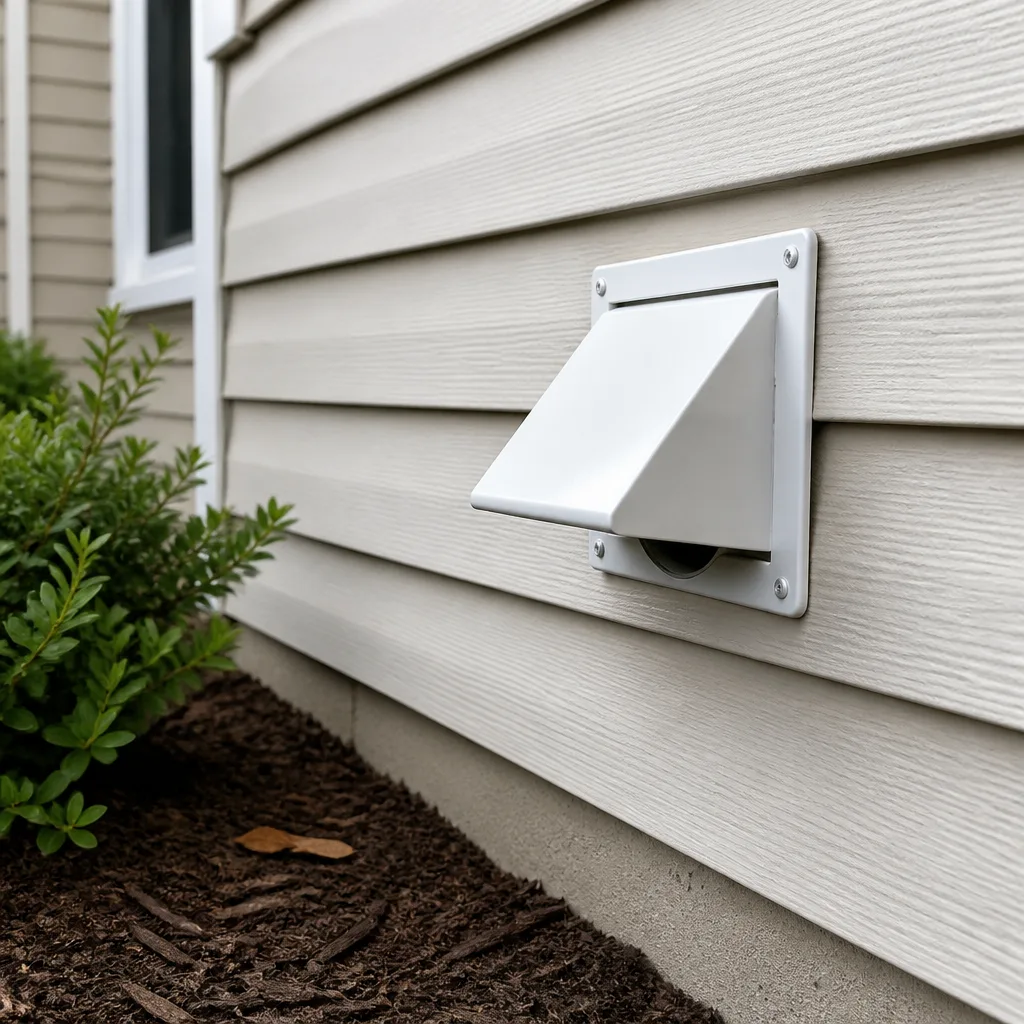 Dryer vent cleaning
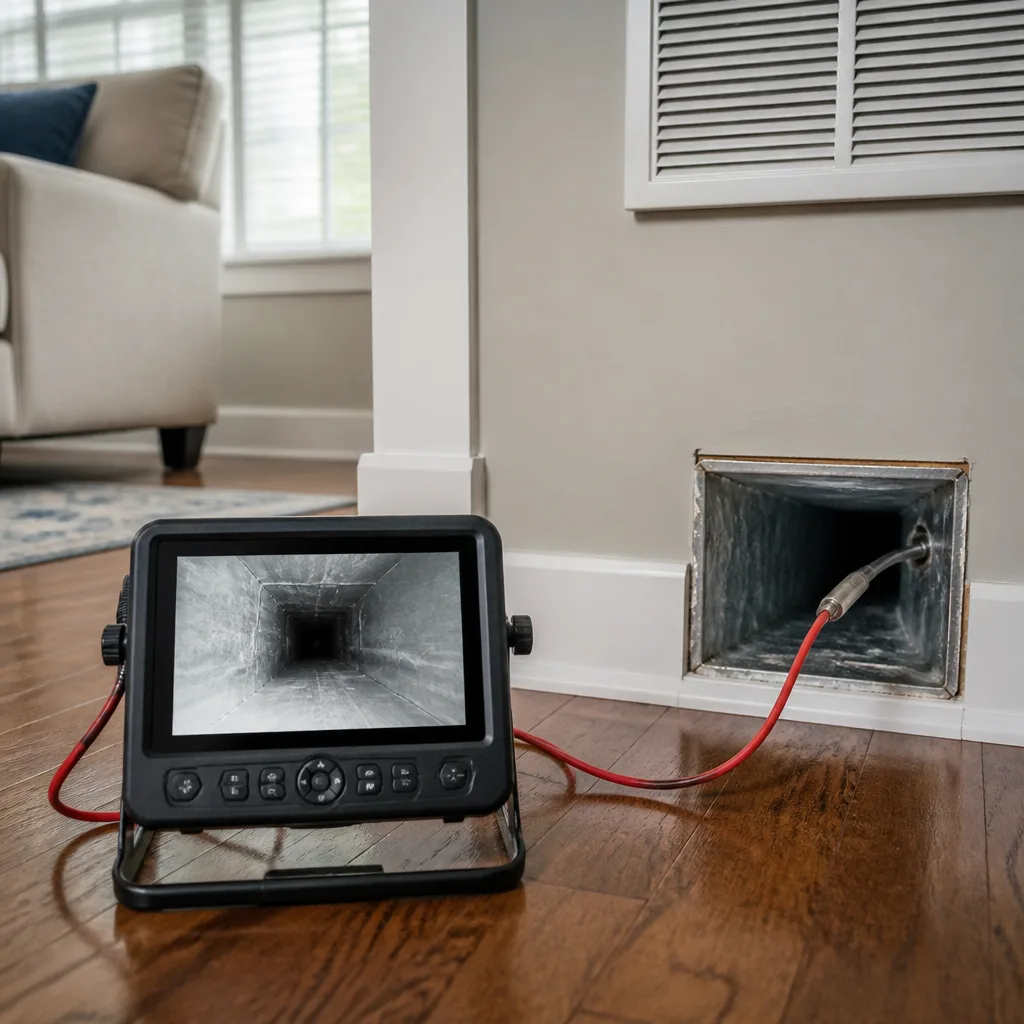 Camera inspection
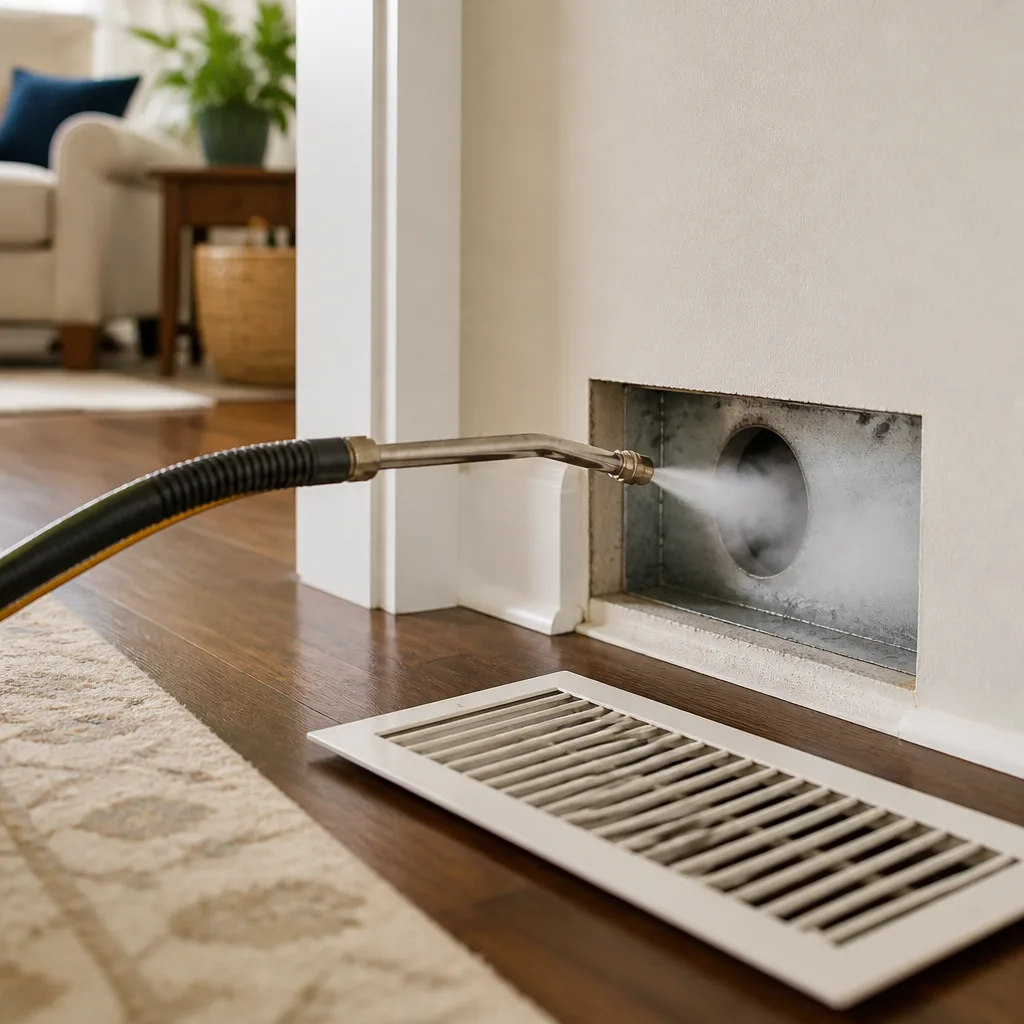 Sanitizing & deodorizing
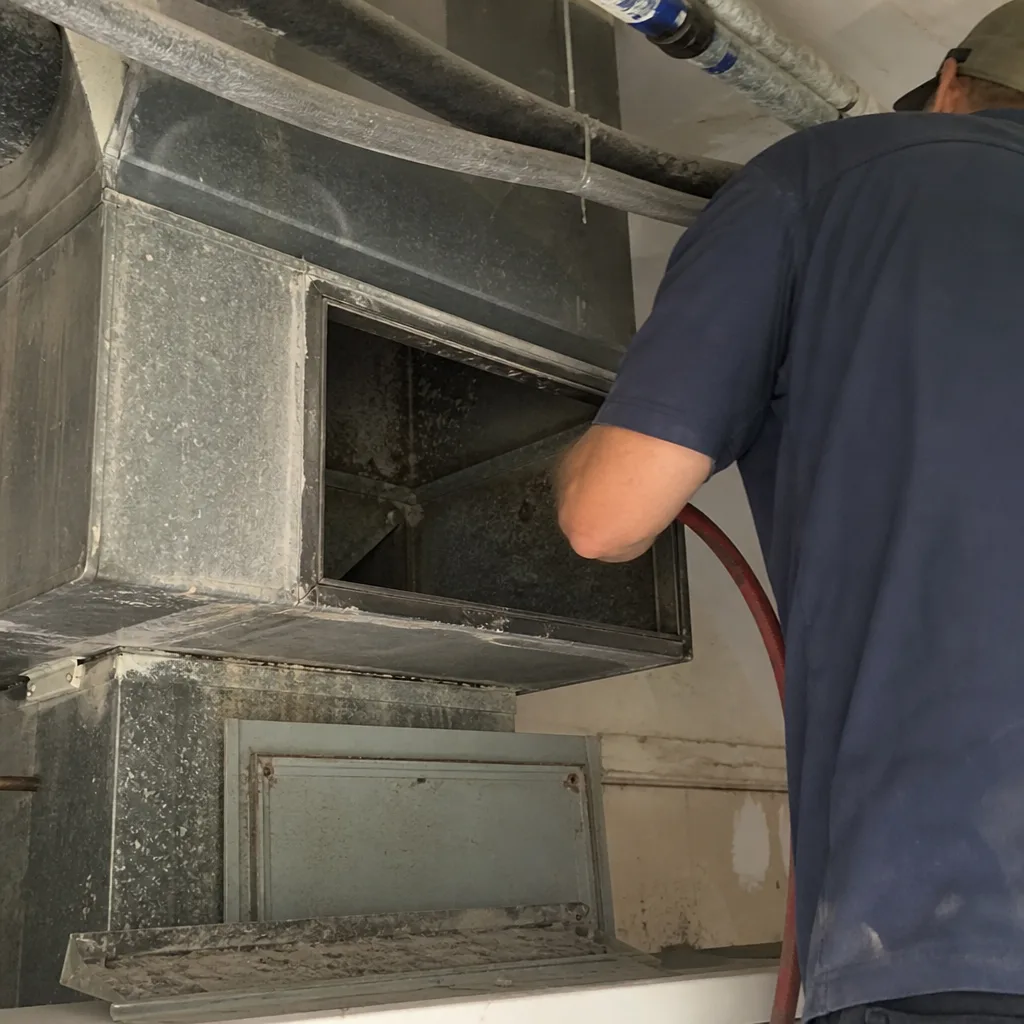
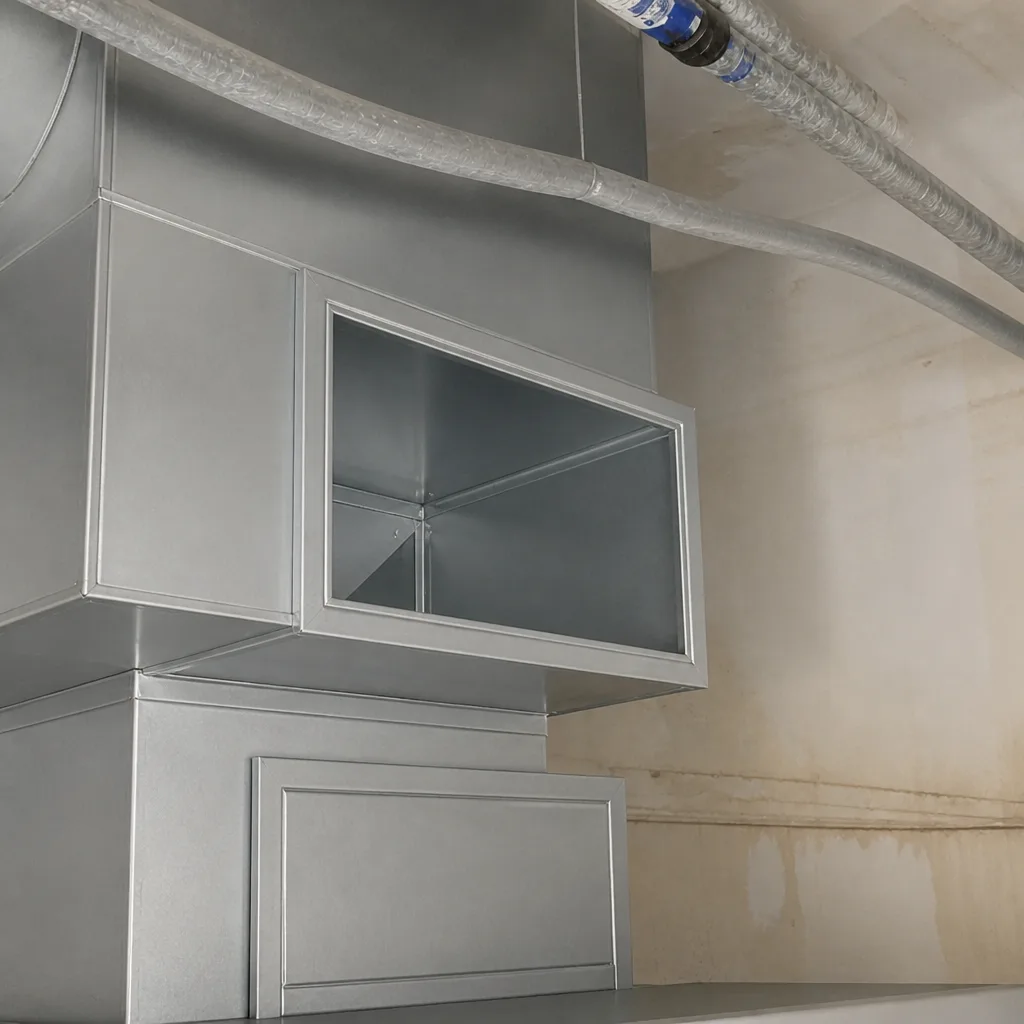
Whole-system duct and dryer vent check with before-and-after photos - you see exactly what came out of your vents
That "$99 whole-house special" is a bait ad - the real number appears once they are in your hallway, or the "clean" is a shop-vac at the register. We photograph the inside of your ducts before and after instead.
Air Duct Cleaning Warning Signs: A Saratoga Springs Homeowner’s Reference Guide
If you’ve changed your furnace filter, deep-cleaned your home, and your family is still waking up with congestion every morning, the problem almost certainly isn’t your filter. It’s what’s living upstream of it in your duct system. Most homeowners in Saratoga Springs misattribute the clues: the musty smell gets blamed on the carpet, the dusty shelves on the furniture, the morning allergy flares on pollen season. In our experience, those same symptoms point back to one place again and again, and once you learn to read them as a diagnostic set rather than separate annoyances, the duct system stops being invisible. This guide walks through each warning sign, what causes it, and how to tell normal house dust from active contamination. By the end you’ll know how to test your own registers and when to call for help.
Quick Answer
Your air ducts need professional cleaning when you see a fine layer of dust returning to surfaces within days of cleaning, smell a persistent musty or stale odor when the system runs, notice dark staining around supply registers, or find that allergy symptoms ease when you leave home and return within about 30 minutes of walking back in. These signs mean the duct system is actively redistributing particles, not just settling normal household dust. A white-cloth test over a register is the fastest way to confirm it for yourself.
Styles & brands we work with
- Whole-home duct cleaning
- Dryer vent cleaning
- Camera inspection
- Sanitizing & deodorizing
Table of Contents
- The White-Cloth Test: Normal Dust Settling vs. Active Contamination
- What That Musty Smell Is Actually Telling You
- Allergy Symptoms That Improve When You Leave and Worsen When You Return
- Dark Staining Around Supply Registers and What It Reveals
- Warning Signs Specific to Saratoga Springs New Builds
- Why Utah County’s Dry, High-Desert Climate Changes the Picture
- How to Verify the Work Was Actually Done
- How Often Ducts Really Need Cleaning
The White-Cloth Test: Normal Dust Settling vs. Active Contamination
Every home has dust. That’s not the question. The question is whether your duct system is adding to it. There’s a real, testable difference between dust that settles from the air onto surfaces and dust that’s being pushed out of a register into your room, and you can check it yourself in about ten minutes with a white cloth.
Run the test during a normal heating or cooling cycle, when the blower is actively pushing air:
- Hold a clean white cloth or paper towel flat over a supply register for about 30 seconds while the system is running.
- Repeat at two or three registers in different rooms so you’re not judging by one.
- Look at the cloth in good light. A light, even gray tint is what normal airborne dust does to fabric.
- Watch for grit, hair, dark fibers, or a visible smear of fine dark powder. That’s the difference that matters.
- Repeat the test on a return grille. Returns pull air in, so they often catch heavier debris than supplies push out.
Grit and fibrous material on the cloth is the signal you’re looking for. It means particles are being carried out of the ducts and into the room, which only happens when there’s enough loose material inside the system to be picked up by airflow. A dusty shelf can be wiped down. A duct system that refills that shelf every few days is a different problem requiring a different fix.
For a baseline, run this test right after you’ve dusted and vacuumed, then run it again five to seven days later. If surfaces are noticeably re-coated within a week, especially near the registers themselves, the source is upstream. This is the single most reliable read a homeowner can take on their own system before calling anyone.
What That Musty Smell Is Actually Telling You
A smell isn’t a symptom on its own. It’s a location clue. Homeowners in Saratoga Springs often describe the same odor differently, but the cause behind it usually falls into one of a few buckets, and each one has a different solution path. Getting the cause right is what separates an actual fix from repeated surface cleaning.
Mold at the evaporator coil
If the smell is strongest when the air conditioning runs and fades when the system is off, the source is typically the evaporator coil and the wet surfaces around it. Cooling creates condensation. When that moisture doesn’t drain or dry properly, biological growth starts on the coil and in the plenum immediately downstream. Cleaning the ducts alone won’t resolve this. The coil needs to be addressed, and for that reason we pair system cleaning with air quality and sanitizing work rather than treating the two as separate jobs.
Debris accumulation in the return plenum
A heavier, dusty, stale smell that’s present whenever the blower runs, hot or cold, often points to a return plenum loaded with accumulated debris. Returns are the intake side, and they collect more by volume than supplies. When the airstream passes continually over that debris, the smell becomes constant rather than seasonal.
A dead pest in a branch duct
A smell that appears suddenly, stays localized to one room or one zone, and has a distinctly sharp or sour character is often organic material in a single branch duct. This type is usually isolated rather than system-wide, which is good news. It also means a full clean may not even be needed if the rest of the system tests clean.
Where these get confused is that all three can present as “a musty house.” If the odor changes with the air conditioning, suspect the coil. If it’s constant while the blower runs, suspect the return. If it’s sudden and confined to one room, suspect a branch line. That’s the diagnostic map we work from when a homeowner describes a smell over the phone.
Allergy Symptoms That Improve When You Leave and Worsen When You Return
This is the most telling sign and the one most often misdiagnosed. Outdoor pollen doesn’t improve when you go to work and worsen within half an hour of walking back through your own door. Ambient outdoor allergens are roughly even wherever you go outdoors. A pattern that follows your house is a pattern that lives in your house.
The clinical tell is the timeline. Symptoms that begin clearing within an hour or two of leaving and flare again within about 30 minutes of returning point to an allergen source inside the home, and the duct system distributes those allergens into every room it serves at the same time. That’s why the symptoms tend to be house-wide rather than confined to one bedroom. One polluted room is a room problem. Four rooms at once is an airstream problem.
It’s worth ruling out other sources before blaming the ducts. Carpet, bedding, pets, and upholstered furniture all hold allergens. Here’s the sequence we suggest:
- Track your symptoms for one week against whether you’re home or away. Note the time it takes to flare after you arrive.
- Rule out bedding and pillows by washing them on a hot cycle and seeing whether the morning congestion eases.
- Run the white-cloth test in the room where symptoms are worst.
- Have someone without allergies spend an hour in the home and describe what they smell and feel. A neutral nose is useful data.
- If the pattern follows the house rather than the furniture, the system is the next logical step.
Utah County’s pollen seasons are real, and spring and fall can genuinely aggravate outdoor allergies. The distinction is behavioral. If your symptoms peak indoors, in a closed house, with the windows shut and the HVAC running, that’s the duct system’s signature rather than the tree line’s.
Dark Staining Around Supply Registers and What It Reveals
Dark streaks radiating from the edges of a supply register, or a shadow ring on the drywall or ceiling paint around the grille, are not a cosmetic issue. They’re evidence of bypass air. Bypass air is air that escapes from a gap in the ductwork at the register boot rather than coming out through the grille. It carries fine carbon dust and particulate along with it, and over months it deposits a visible stain on the surrounding surface.
What that tells us is that the duct system is leaking at the connection point. The implications go beyond appearance:
- Reduced delivered air. Air that escapes at the boot never reaches the room, so your system runs longer to satisfy the thermostat.
- Unfiltered air intake. A gap downstream of the filter lets unconditioned, unfiltered air into the supply side.
- Re-contamination. A duct system can be cleaned perfectly and still refill with debris within a season if the leaks that pull in that debris are never sealed.
This is exactly why we treat duct repair and sealing as part of the same service family as cleaning. Cleaning without sealing fixes the symptom and ignores the cause. On the other end of the same issue, sealing without cleaning leaves the accumulated debris sealed inside. The two are meant to be done together, and it’s a large part of why so many “why did the dust come back” calls in Saratoga Springs end with a repair scope rather than a second cleaning.
Staining isn’t always severe. A light halo is a small leak. A defined, dark streak is a larger one. Either way, it’s worth a professional look rather than a fresh coat of paint over the top of it.
Warning Signs Specific to Saratoga Springs New Builds
New construction and recently built homes in Saratoga Springs have a distinctly different set of duct warning signs than older homes. The construction dust, the materials, and the way flexible ductwork gets installed during a build all create scenarios that don’t show up in a house that’s been lived in for years.
Visible insulation fragments at the registers
During construction, ductwork is often installed before the drywall goes up, then the whole house is swept, sanded, and finished. Some of that debris and some fiberglass insulation material ends up inside the duct system even before it’s sealed. When the system first runs, small fragments and fibers can blow out through the registers. If you see fibrous, light-colored material collecting on windowsills or furniture right after moving in, the ducts themselves are carrying construction residue.
Inconsistent room temperatures
A home where one bedroom never reaches the temperature the rest of the house hits, and where the difference is stubborn rather than weather-dependent, often has a disconnected or poorly sealed flex duct. Flexible ductwork can separate at a joint, get pinched during construction, or end up kinked by furniture or a finish carpenter. That’s a repair scope, not a cleaning scope, and it’s why we check duct integrity in a new-build job rather than assuming the system is sound.
Chemical off-gassing smells in the first year
New homes off-gas during their first year. Paint, adhesives, cabinetry, sealants, and flooring all release volatile compounds, and a well-sealed new home traps them. Homeowners often assume a duct cleaning will resolve it. It helps with dust and with the airstream, but off-gassing is an air exchange problem, and in many Saratoga Springs new builds the honest answer is that ventilation and filtration are the conversation. We look at what the system carries and where it needs filtration before we clean.
Our technicians have up to 8 years of experience reading these signs, and new-build diagnostics are among the least predictable. A house can have a perfect duct system and a badly installed flex run at the same time.
Why Utah County’s Dry, High-Desert Climate Changes the Picture
Saratoga Springs sits on the eastern edge of Utah Lake in a high-desert climate. Relative humidity indoors routinely runs low through much of the year. The local climate changes what duct contamination looks like and what warning signs matter most, and it’s worth understanding so you don’t misinterpret one set of clues as another.
- Dust loading is heavy. Dry, windy weekends and construction across the city mean exterior particle load is higher than in humid climates. Filters work harder here, and filters that work hard also pass fine particulate when they get loaded.
- Cooling is more common than heating in the warm months, and that changes the mold story. The coil runs wet in cooling season. When it’s not running, it dries fast in the local air. Mold at the coil shows up more readily in the shoulder months when the system cycles without a long continuous run.
- Dry air masks the smell symptom. Very dry air mutes your nose’s ability to detect some volatile compounds. Odor warnings can be quieter here, which pushes homeowners to rely on dust and staining instead.
- Winter-time static is real. Dry air combined with particle movement can mean more visible dust recurrence on surfaces even when the ducts are clean, so a light baseline is normal.
The practical takeaway is that Saratoga Springs homeowners should weight visible dust and staining higher than smell, because the local climate tends to dampen what your nose would pick up in a more humid part of the country. If you don’t smell it but you’re still wiping the entertainment center twice a week, you may still have a duct problem.
How to Verify the Work Was Actually Done
You can’t see inside your own ducts, and the entire industry has a reputation problem built on that fact. The objection is fair: a company with a vacuum truck can show up, run equipment for two hours, and hand you a bill, and you have no way to verify any of it. Here’s what genuine verification looks like.
- Before-and-after photos of your own system. Not stock photos. Photographs of your registers, your return grilles, and the inside of your supply and return lines before cleaning starts and after it finishes. This is the standard most of this industry falls short on, and it’s exactly the standard we hold ourselves to on every job.
- A camera inspection. Rotobrush and Nikro systems are built for source removal inside the duct, and they’re paired with inspection so the technician can see the interior rather than guessing.
- A coherent method. Proper cleaning means source removal with negative pressure, not a shop vac taped to a register. If the equipment setup doesn’t look serious, ask what they’re running.
- A written scope. One flat price per system, agreed before any work starts, with the scope in writing. No per-vent price, no surprise line items after the vacuum is running.
- A conversation about repair, not just cleaning. If the system has leaks or a disconnected run, the estimate should reflect it. A company that only cleans and never seals isn’t doing the whole job.
Our approach is built around this. We use Rotobrush and Nikro equipment because source removal is what actually works, we take before-and-after photos of your own ducts, and we price per system so you know the number before we start. If you want a sense of the full service, air duct cleaning is the entry point, and the rest of the work follows what we find. You can also see the full range of what we offer on the Saratoga Springs Air Duct Cleaning Pros homepage.
How Often Ducts Really Need Cleaning
The honest answer is that there’s no fixed interval that applies to every home. Most homes don’t need ducts cleaned on a set schedule at all. Cleaning is driven by conditions, not by the calendar, and the right question is whether your home currently meets the warning-sign threshold rather than whether it’s been two years.
Here’s how we’d frame the decision:
- New construction or recent renovation. Clean once soon after, because construction debris and drywall dust get into the system before it’s sealed.
- Persistent symptoms despite filter changes. If the white-cloth test shows grit and hair, or surfaces re-dust within a week, it’s time.
- After a pest problem or a visible mold discovery. Clean and sanitize, then seal the leaks that let the issue start.
- Routine maintenance. Keep changing filters, keep an eye on registers, and re-run the white-cloth test once a year. That’s the check, not a cleaning.
Dryer vents are the exception where the interval matters more. They should be cleaned periodically regardless of dust symptoms, because the material that builds up in the line is flammable. Most homeowners never think about their dry vent at all, which is a large part of the reason dryer vent cleaning gets overlooked on duct-only call volume. It’s one of the leading causes of residential fires and it’s not a job to defer.
For the heating and cooling equipment itself, the same logic applies. HVAC cleaning is worth considering when the coil, blower, and drain pan have visible accumulation, which usually shows up as a musty smell with cooling or an efficiency drop you can feel in your energy bill.
Common Mistakes to Avoid
- Assuming a fresh filter solves it. A filter catches what reaches it. Debris sitting on the return side of the filter, or on the supply side, keeps circulating regardless of how new the filter is.
- Trusting a per-vent price. Per-vent pricing rewards adding vents to the count. Whole-system, flat-price estimating is what keeps the scope honest and the final bill matching the estimate you were quoted.
- Painting over stained registers. The stain is the visible end of a duct leak. Painting hides the evidence and lets the efficiency loss continue.
- Cleaning without sealing. On a leaky system in Saratoga Springs, cleaning without addressing the leaks means the dust returns within a season and the bill gets paid twice.
- Ignoring the dryer vent. A clogged dryer vent is an appliance-damage issue and a fire risk, and it doesn’t show up on the white-cloth test. It’s a separate inspection.
- Judging by smell alone in a dry climate. Utah County’s low indoor humidity mutes odors. Dust and staining patterns deserve more weight than your nose here.
- Hiring for cleaning when the problem is repair. A disconnected flex duct or an unsealed boot isn’t a debris problem. It needs a repair scope, and a company without that capability ends up billing for a cleaning that doesn’t fix anything.
See the difference
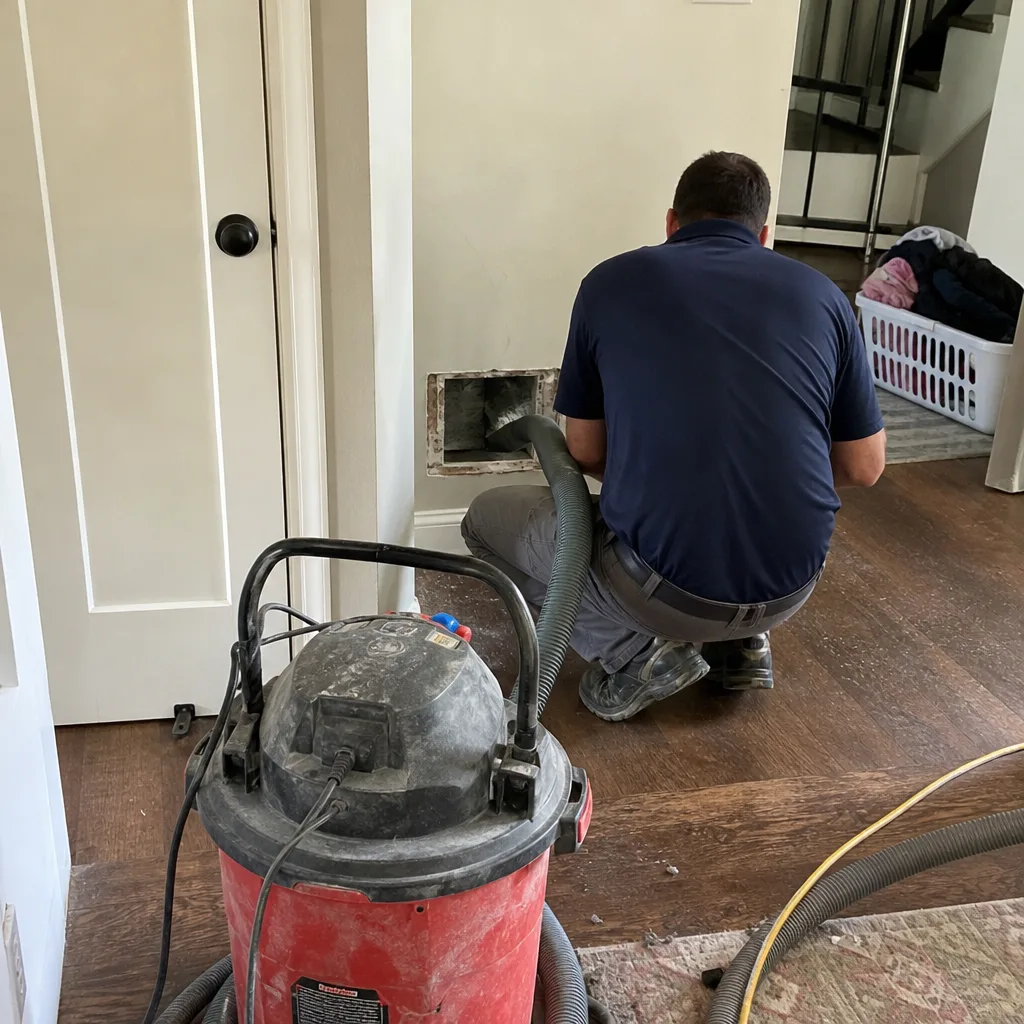 Before
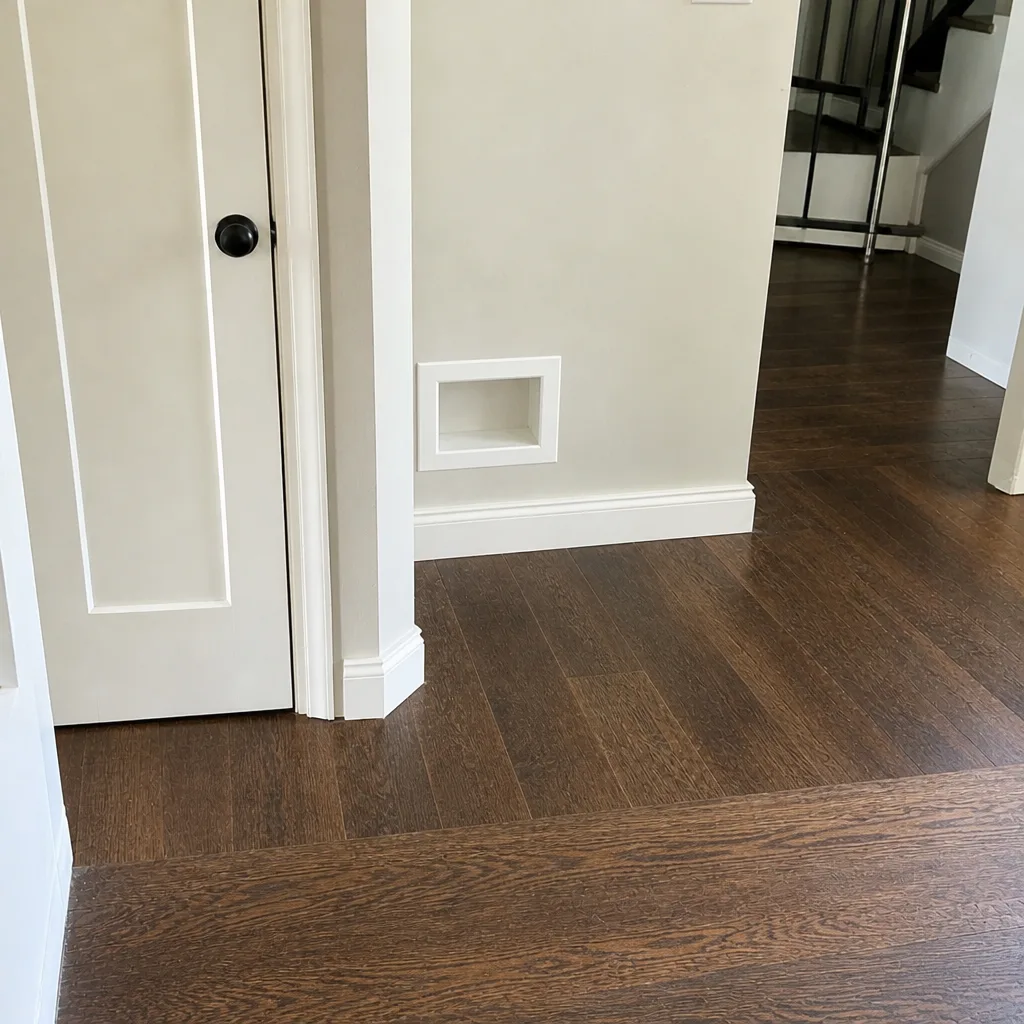 After
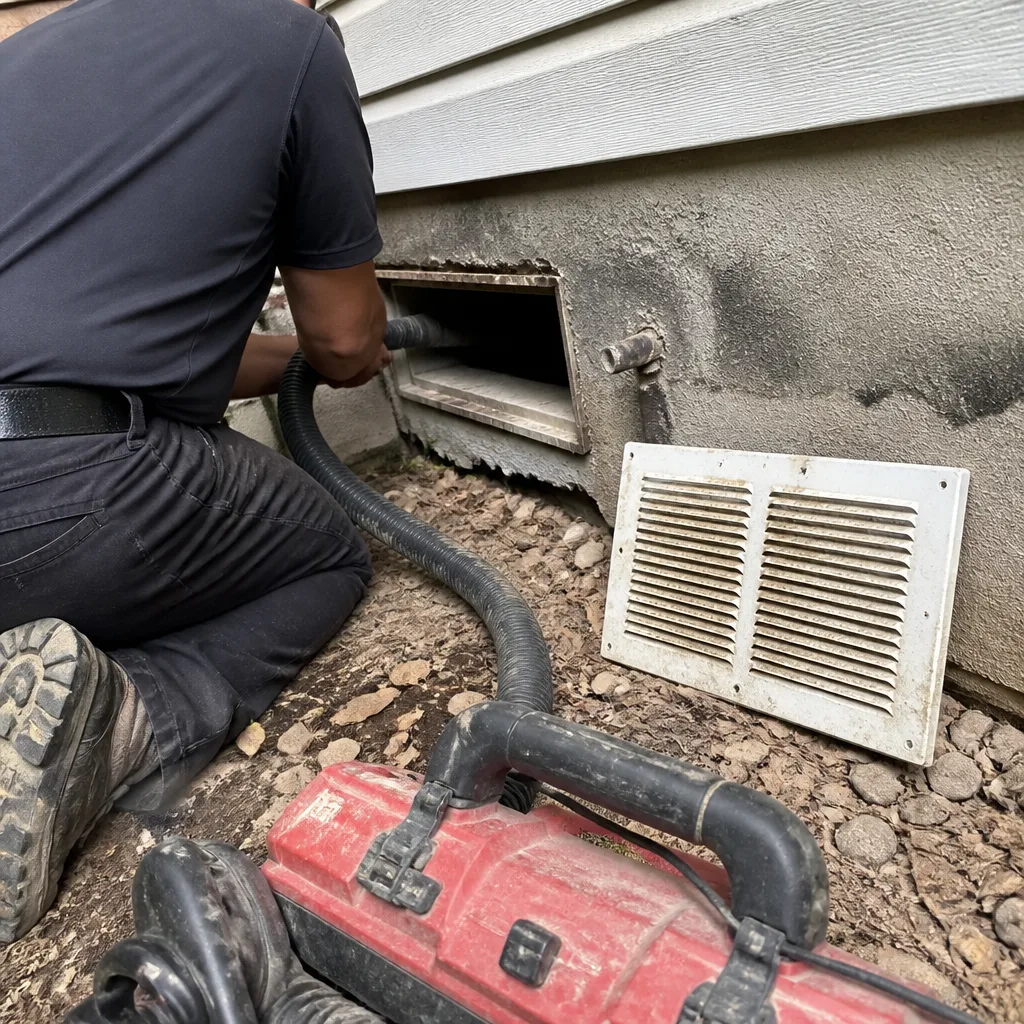 Before
 After
 Before
 After
When to Call a Professional
Call a professional when the warning signs overlap rather than show up alone. A musty smell by itself could be a carpet. A dusty shelf could be your table. Odor plus rapid dust recurrence plus a white-cloth test showing grit plus morning congestion that clears when you leave the house is a duct system telling you something. Visible insulation fragments after a move into a new build, a disconnected duct, dark staining at a register boot, or a dryer vent that runs hot and takes longer than it should, all warrant a professional set of eyes.
Saratoga Springs Air Duct Cleaning Pros offers free estimates in Saratoga Springs. We cover duct cleaning, dryer vent work, HVAC cleaning, duct repair and sealing, and air quality and sanitizing as a single set of services, so a diagnostic visit can turn into an actual fix. Call (844) 542-4260. We answer 24/7. Fast dispatch from 7am to 7pm, Sunday through Friday.
Frequently Asked Questions
Run the white-cloth test over two or three registers while the blower is running. If you pick up grit, hair, or fibrous material rather than a light gray tint, your ducts are actively pushing debris into the room and need professional cleaning. Pair that result with a persistent musty smell, dark staining at the register boots, or allergy symptoms that flare within 30 minutes of arriving home, and the case is strong. Call (844) 542-4260 for an exact quote – estimates are free.
Cost depends on the size of the system and whether repair or sanitizing is part of the job. We price per system, not per vent, and you get one flat number in a written estimate before any work starts. We don’t do coupon pricing, because a coupon number that grows into a larger invoice on site is exactly the bait-and-switch pattern that makes homeowners distrust this trade. Call (844) 542-4260 for an exact quote – estimates are free.
Cheap quotes usually mean a smaller scope or a smaller machine. A truck-mounted vacuum truck can clean from the outside in, or a technician with a shop vac can sweep a few grilles and call it done. Neither is source removal of the full system. Professional equipment like a Rotobrush or Nikro system does source removal inside the ducts, with inspection, and that’s the work that actually resolves the problem. Call (844) 542-4260 for an exact quote – estimates are free.
Ask for before-and-after photos of your own ducts and a written scope with a single flat price. That’s the standard we hold ourselves to. A proper clean includes inspection, source removal with professional equipment, and a photo record you keep. If a company won’t provide this, they didn’t do the job you paid for. Call (844) 542-4260 for an exact quote – estimates are free.
Only when conditions call for it, not on a fixed schedule. Most homes don’t need a cleaning every year. New construction, recent renovation, a pest problem, a visible mold discovery, or recurring symptoms despite filter changes are the triggers. Keep changing filters as the manufacturer directs and re-run the white-cloth test once a year to check. Call (844) 542-4260 for an exact quote – estimates are free.
Not worse in terms of mold, but different. Low indoor humidity here means more static and more exterior dust loading, and your sense of smell is less reliable. That pushes homeowners to rely on the white-cloth test and staining patterns instead of odor. If dust keeps returning within a week despite a clean home, that’s your cue. Call (844) 542-4260 for an exact quote – estimates are free.
The Bottom Line
Duct contamination announces itself through dust that returns too fast, a smell that maps to a specific location in your system, allergy symptoms that follow your house rather than your day, staining around register boots, and the distinctive signs of a new build’s construction residue. None of those signs is conclusive alone. Together, they point in one direction. The white-cloth test is your cheapest diagnostic, and running it once a year, along with keeping up with your filters and giving the dryer vent its own attention, keeps you ahead of the problem. If the signs are there, we fix the cause rather than the surface.
Written by the team at Saratoga Springs Air Duct Cleaning Pros.