
Abatement Technologies Air Duct Cleaning in Saratoga Springs: A Homeowner’s Guide
The machine pulling debris out of your ducts is exhausting air somewhere. If that exhaust isn’t HEPA-filtered, you’re relocating contaminants from inside your ducts to inside your living space. Most homeowners never think to ask where the exhaust goes. The best ones ask what’s catching it. That question is the whole difference between a real duct cleaning and a very expensive way to stir up dust.
Abatement Technologies equipment was built for mold and asbestos containment. When a duct cleaning job uses that tier of machine, the containment standard is higher than what a standard rig can offer. This guide explains what that means in practical terms for Saratoga Springs homes, and when it’s genuinely worth paying for versus when someone is upselling you.
What makes Abatement Technologies equipment different from a standard duct vacuum?
Abatement Technologies negative air machines are HEPA-rated to capture particles at 0.3 microns with high efficiency. A standard duct cleaning vacuum pulls bulk debris but doesn’t filter its exhaust to that level. That distinction matters because duct cleaning involves dislodging material that’s been sitting in a system for years.
Think about what’s actually in a typical Saratoga Springs duct run: settled dust, drywall particles from a past remodel, pet dander, pollen tracked in during Utah’s windy spring, and sometimes mold spores in homes with moisture history. When a machine agitates that material, a portion of it goes airborne inside the ductwork. If the vacuum’s filtration isn’t rated for fine particulate, some of that load travels back into the rooms through supply registers, gaps in the system, or the exhaust port itself.
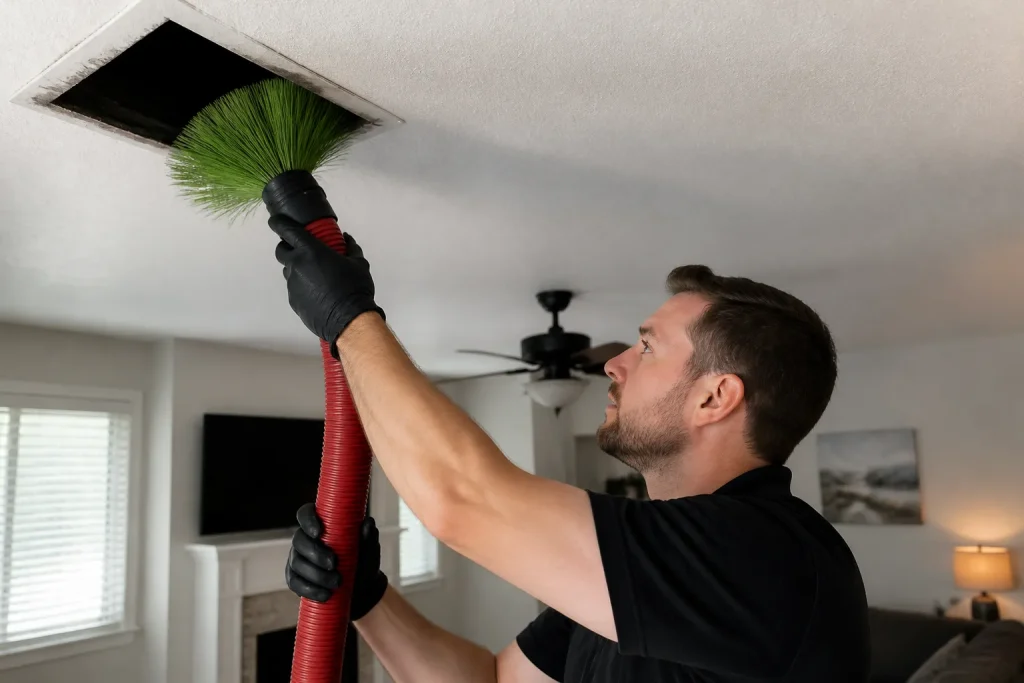
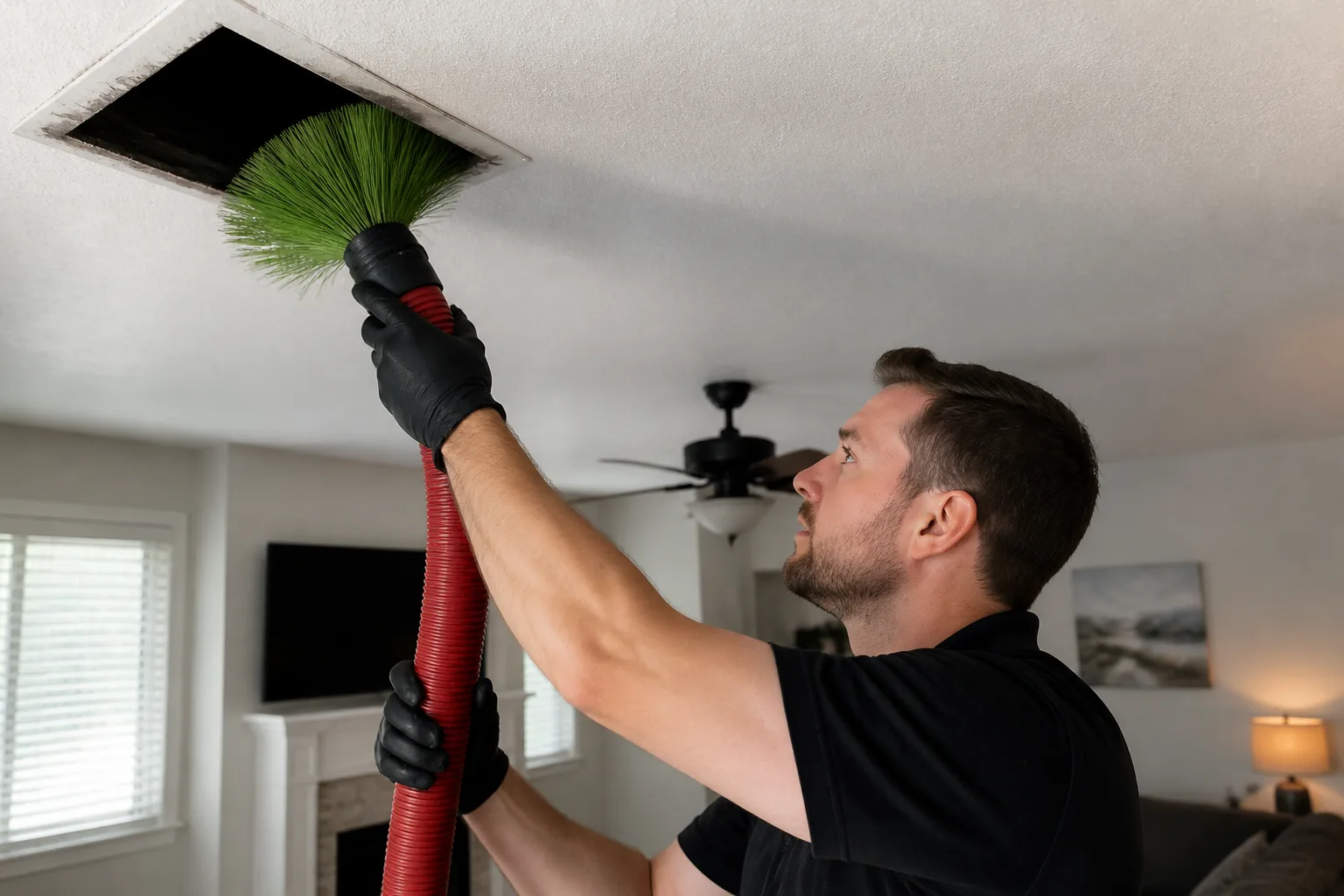
Professional duct cleaning equipment from Rotobrush and Nikro handles the agitation and extraction side well. The Abatement tier adds containment: HEPA filtration on the exhaust, and in many setups a negative air machine that keeps the whole duct system under slight negative pressure while work is underway. Filtration plus containment is a different class of job than extraction alone. If you want to understand how the full process is supposed to work, our air duct cleaning page walks through each stage.
Why Abatement-class containment matters most for certain homes
Not every home needs the highest equipment tier. But some homes benefit from it in a way that’s hard to argue with. Here’s where we see the strongest case:
- Mold-suspect history. If a home has had a roof leak, a flooded basement, or visible growth near vents, the ducts may hold spores. Disturbing them with unfiltered equipment can spread contamination through the living space instead of removing it.
- Post-renovation dust. Drywall sanding and demo work push fine particulate into return ducts. That material is exactly the size class HEPA filtration is designed to capture.
- Respiratory-sensitive occupants. Homes with occupants managing asthma, allergies, or other respiratory conditions benefit from containment that a basic vacuum can’t provide.
- Recent home purchases. A new buyer often has no idea what the previous owner’s maintenance looked like. Containment-grade cleaning is a reasonable reset.
Abatement Technologies equipment was engineered for remediation work where the air itself is the hazard. That’s why it shows up in containment scenarios. Applied to residential duct cleaning, the same negative-pressure logic applies. If your household falls into any of the categories above, the equipment tier is clinically justified. If none of them do, you likely just need solid extraction and a good filter change.
What “negative air” actually means in a residential duct system
Negative air means the pressure inside the duct system is slightly lower than the pressure in the rooms around it. When the pressure is lower inside, air moves toward the ducts instead of away from them. That’s the goal.
Here’s how a containment setup usually works in a home. A HEPA negative air machine connects to the duct system, often at the main trunk or a large return. The machine pulls air out of the ducts and pushes it through HEPA filtration before exhausting it. Because the machine is pulling more air than leaks back in, the ducts stay under that slight negative pressure. Dust dislodged during agitation gets pulled toward the machine rather than drifting into the rooms. Supply and return registers are typically sealed or covered during the work for the same reason.
The pressure difference is small, measured in fractions of an inch of water column. You won’t feel it. But it’s enough to keep fine particulate moving in the right direction. Without containment, that same dislodged material has no pressure gradient telling it where to go. Some of it settles back into the ductwork, and some of it finds its way into rooms through cracks, unsealed joints, or open registers.
If your home is on the newer side and the ducts were never properly sealed, the leaks that let heated air escape in Saratoga Springs winters also open pathways for dust during cleaning. That’s part of why our HVAC cleaning scope includes checking joints and connections. Leaky ducts have a way of undoing good cleaning work.
When the containment tier is justified, and when it’s being sold to you unnecessarily
The honest answer is that not every Saratoga Springs home needs an Abatement-class containment setup. It’s a real tool, and real tools get oversold. Here’s how to sort it out.
Justified: A visible mold concern in the HVAC system or ducts. House-wide renovation dust. Occupants with respiratory conditions, especially children or elderly household members. A home with a long-deferred maintenance history. Water intrusion or a damp crawlspace affecting the HVAC system. Any situation where you’d want containment, not just extraction.
Probably not needed: A routine cleaning on a home that’s been maintained, with no moisture history and no health concerns. A single-family house with a recent, professional HVAC install and good filtration. A property where the ducts were cleaned a few years back and you’re just keeping up with normal debris load.
In our experience, the right question isn’t “is this premium equipment?” It’s “what does my home actually need?” A specialist should be willing to explain why containment fits your situation, or say plainly that a standard cleaning is the right call. If the pitch is vague about why you need the top tier, that’s information worth having. Abatement Technologies equipment has a specific job. It’s not decoration.
What to verify on-site to make sure you get the equipment you were quoted
You don’t need to be a technician to confirm what’s actually being used in your home. A few specific indicators will tell you plenty.
- The exhaust hose. A HEPA-rated negative air machine has a heavy exhaust hose running from the machine, typically out a window or into a designated area. A standard rig often exhausts directly into the room or out a doorway with no HEPA housing.
- The machine label. Ask to see the unit. Abatement Technologies, Rotobrush, and Nikro units are labeled and branded. If the machine looks like a shop vac on a cart, that’s not a containment-grade unit.
- The filter housing. HEPA units have substantial, serviceable filter housings. They look more industrial and more deliberate than a basic vacuum canister.
- Register sealing. A containment job includes sealing or covering supply and return registers during the work. If registers are wide open while the machine runs, the containment claim doesn’t hold.
- The setup time. Containment takes real setup time. A rig that’s running thirty seconds after the technician walks in likely isn’t a HEPA containment system.
Ask which equipment is being used for your job and why. A specialist will answer clearly. On a related note, if the conversation turns to your dryer vent, our dryer vent cleaning scope covers that separately and shouldn’t be skipped. Lint buildup is one of the more overlooked fire risks in a home.
When to call a pro
If you’re not sure whether your home needs a standard cleaning or containment-grade work, that’s exactly the question a specialist should be able to answer on-site. It’s also a question worth asking before any work begins.
Related services in Saratoga Springs
If your situation extends beyond the ducts and into HVAC components or air quality, we handle those under the same umbrella. You can learn more about how we work at Saratoga Springs Air Duct Cleaning Pros.
The Bottom Line
The equipment pulling air from your ducts determines where your dust ends up. A HEPA-rated negative air machine with proper containment sends that material through filtration. A standard vacuum sends it somewhere else. For homes with mold history, renovation dust, or occupants with respiratory conditions, the Abatement Technologies tier is a meaningful upgrade. For a well-maintained home with no moisture issues, it’s often more equipment than the job requires.
Our technicians have up to 8 years of experience, and we carry the equipment to handle both tiers of work plus the related services that come with them. We answer 24/7. Fast dispatch from 7am to 7pm, Sunday through Friday, and we’re closed Saturday. Estimates are free. If you’re in Saratoga Springs and need help, Saratoga Springs Air Duct Cleaning Pros offers free estimates. Call (844) 542-4260.
Frequently Asked Questions
Containment-grade duct cleaning in Saratoga Springs typically runs higher than a standard cleaning because the equipment tier and setup time are both greater. Pricing is per job by written estimate, not per vent or per hour, so you’ll get a flat number before work begins. The estimate is free, and it should spell out which equipment is being used and why. Call (844) 542-4260 for an exact quote.
You need it if your home has mold-suspect history, renovation dust, water intrusion, or occupants with respiratory conditions. You probably don’t need it for routine maintenance on a dry, well-kept HVAC system. A specialist should be able to explain the fit for your specific situation rather than defaulting to the premium tier. Call (844) 542-4260 to talk through what fits your home.
Look at the machine itself. Abatement Technologies, Rotobrush, and Nikro units are labeled and branded. HEPA-rated negative air machines have a substantial filter housing and a heavy exhaust hose running to a window or designated exhaust point. If the setup looks like a shop vac on a cart, it isn’t a containment unit. Ask which equipment is being used before work begins, and ask to see it.
It means the pressure inside the ducts is slightly lower than in the surrounding rooms, so air moves toward the ducts instead of away from them. During cleaning, dislodged particulate gets pulled into the machine and through HEPA filtration rather than drifting into your living space. You won’t feel the pressure difference, but it changes where your dust ends up.
We’re closed on Saturdays. Dispatch runs Sunday through Friday, 7am to 7pm. If you call outside those hours, we’ll book you into the next available opening. Call (844) 542-4260 to schedule.
Written by the team at Saratoga Springs Air Duct Cleaning Pros.
Need Air Duct Cleaning Help?
Call Saratoga Springs Air Duct Cleaning Pros - the local pro we connect you with is licensed and insured, with free written estimates in Saratoga Springs.
(844) 542-4260