
Last updated November 23, 2026
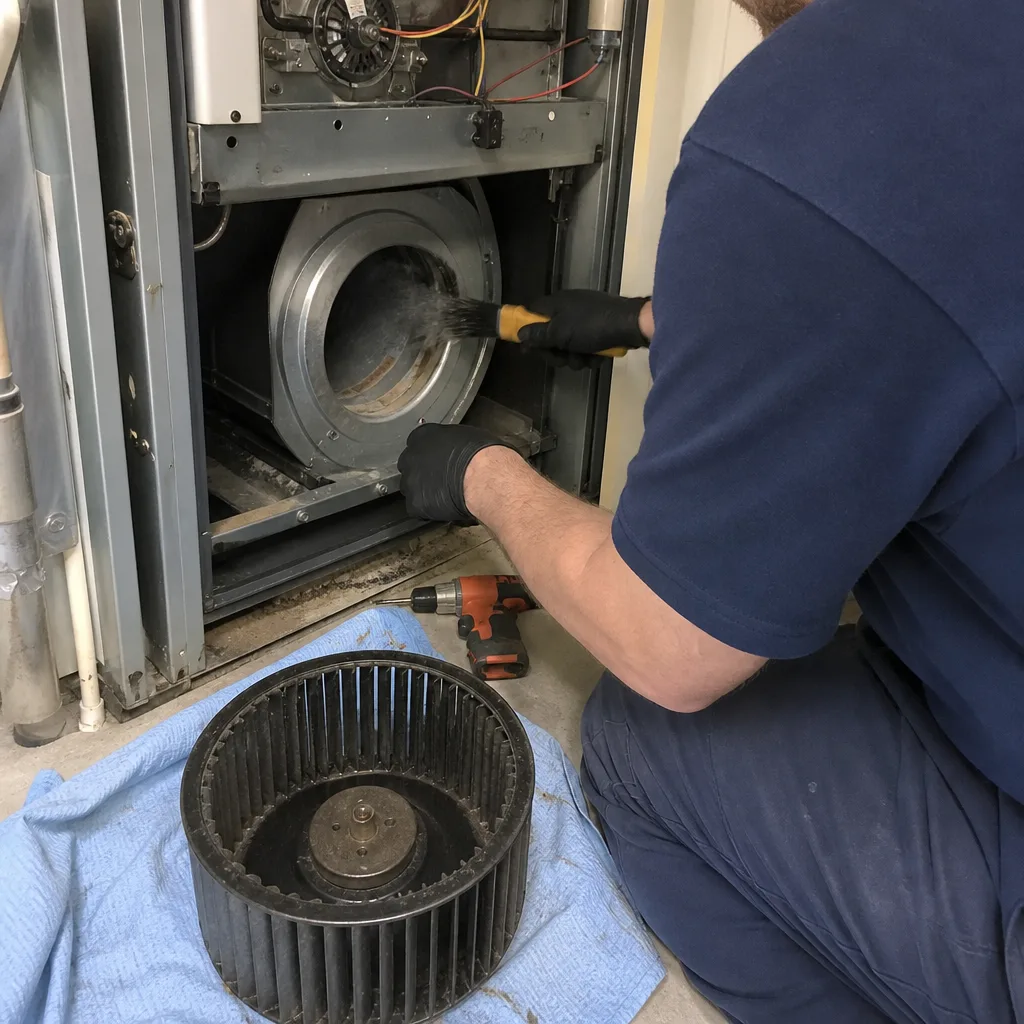
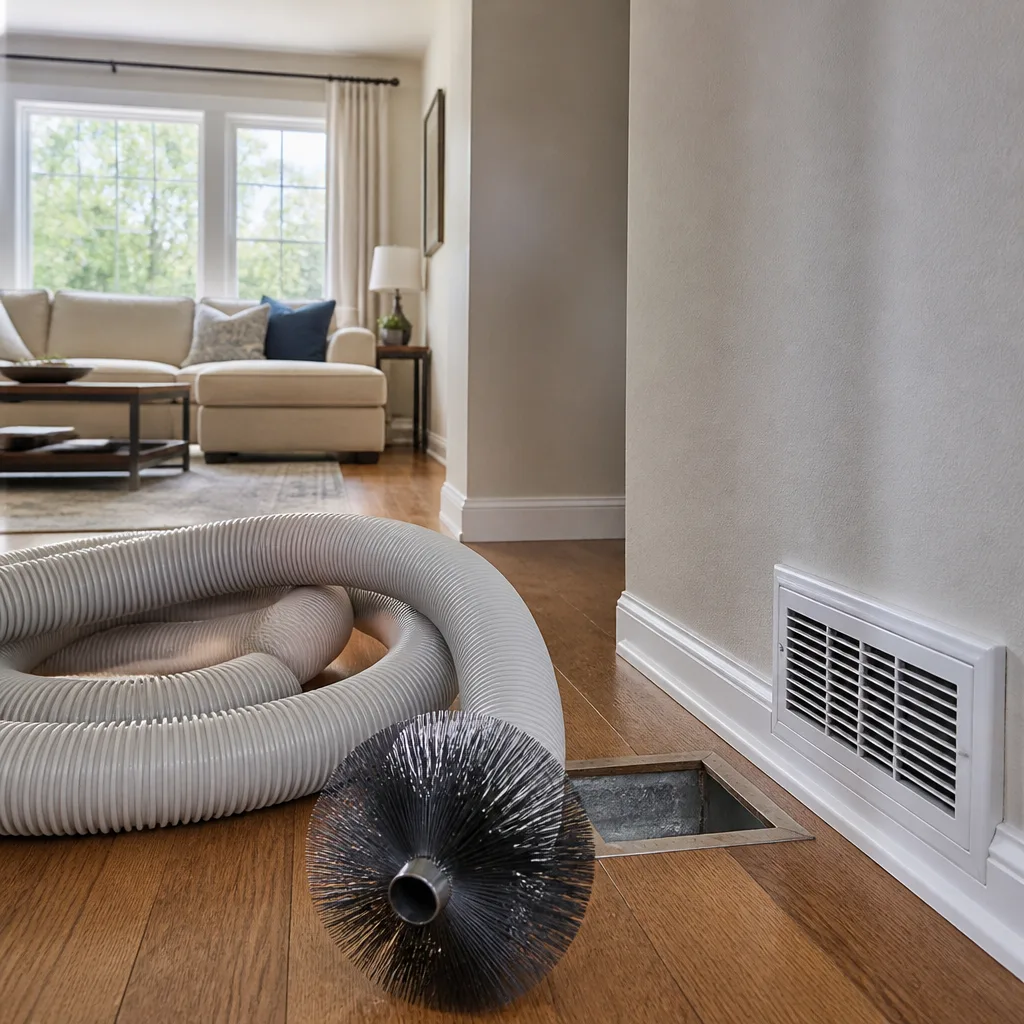 Whole-home duct cleaning
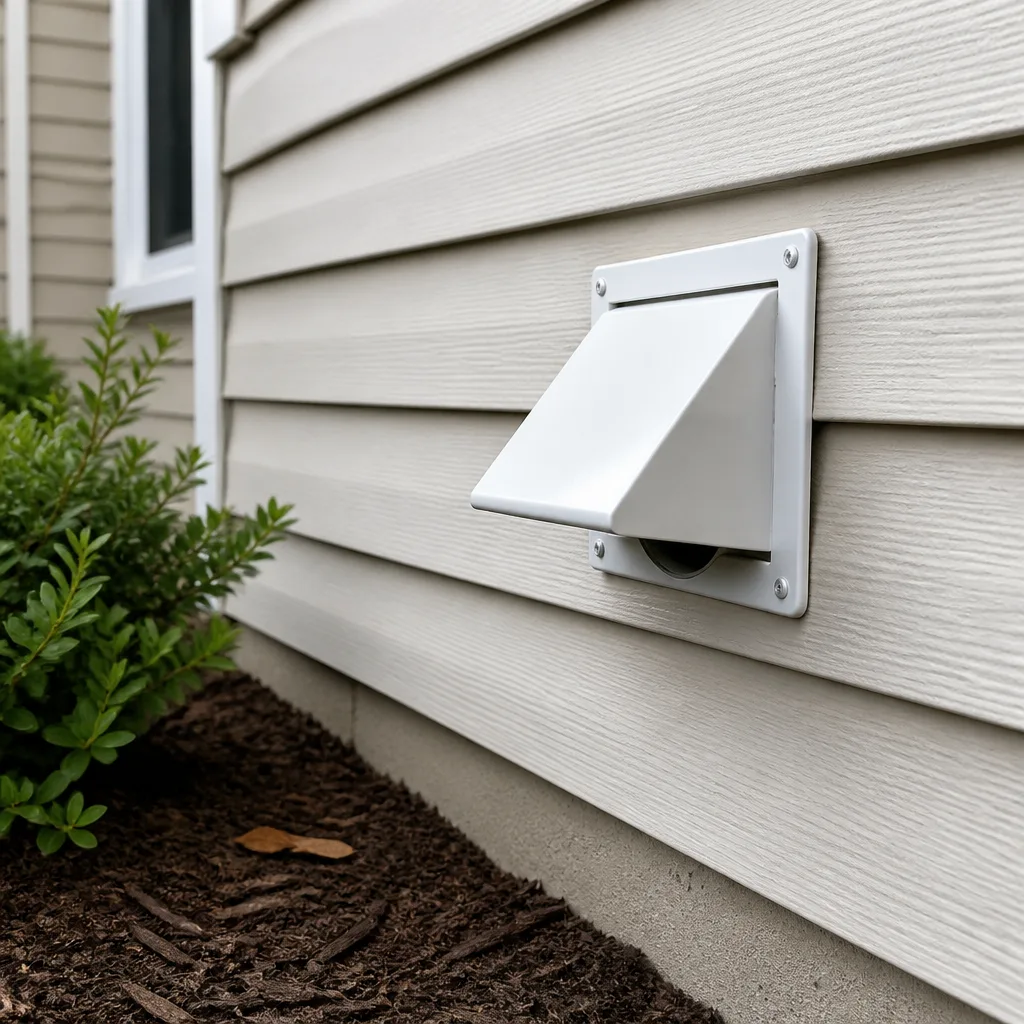 Dryer vent cleaning
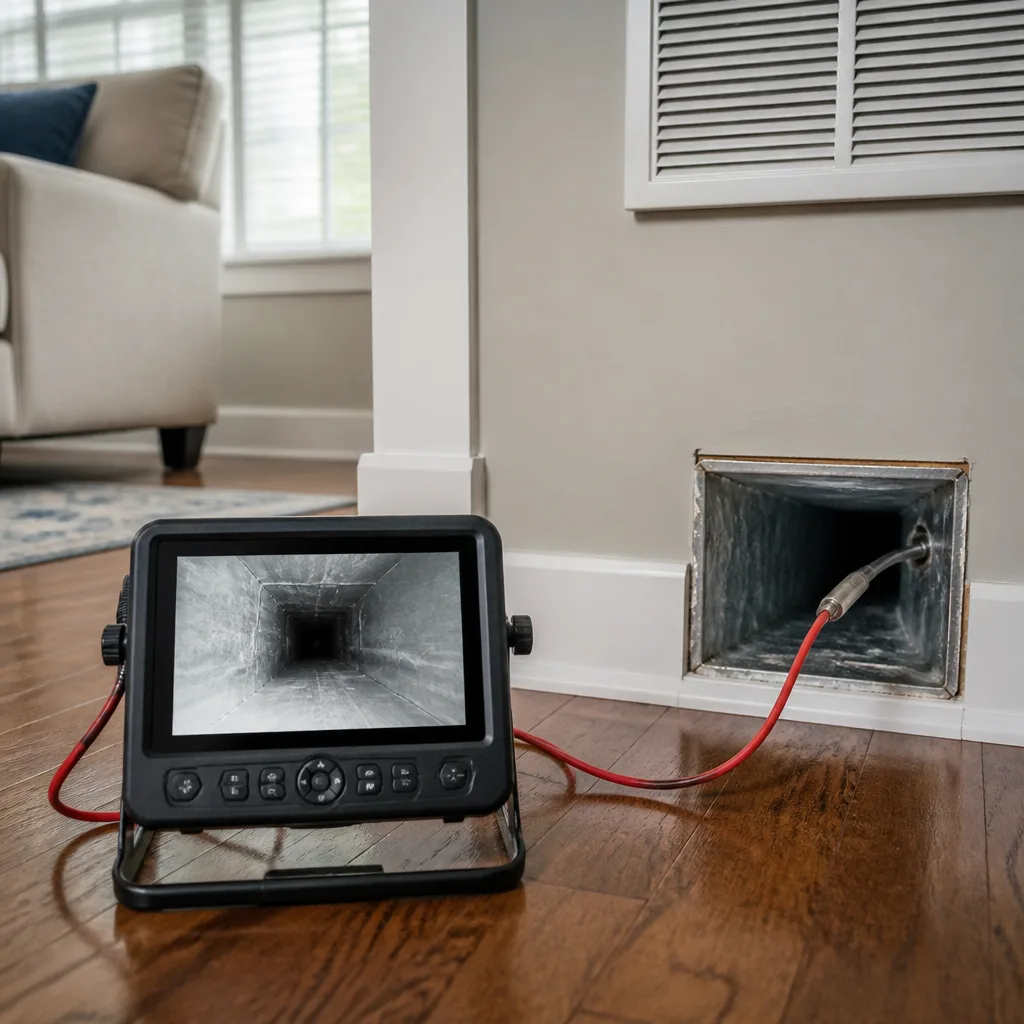 Camera inspection
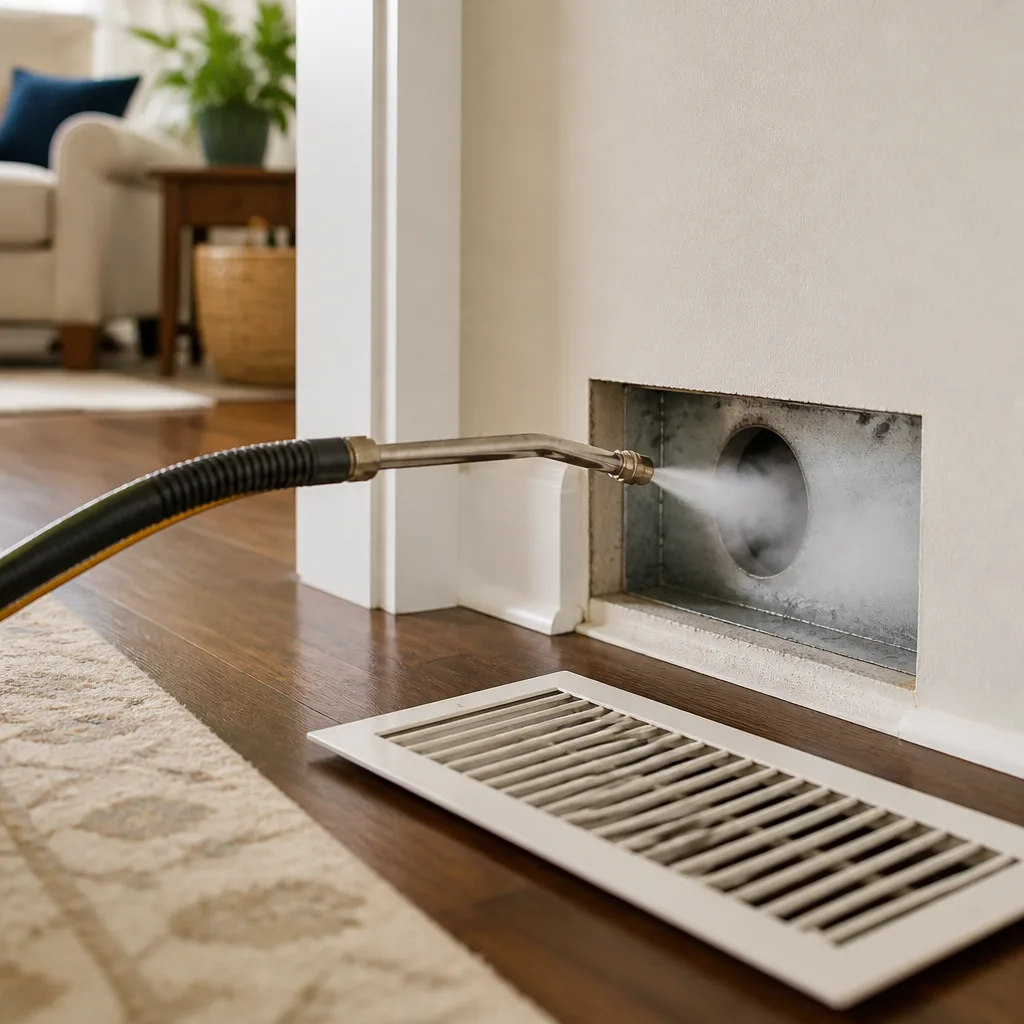 Sanitizing & deodorizing
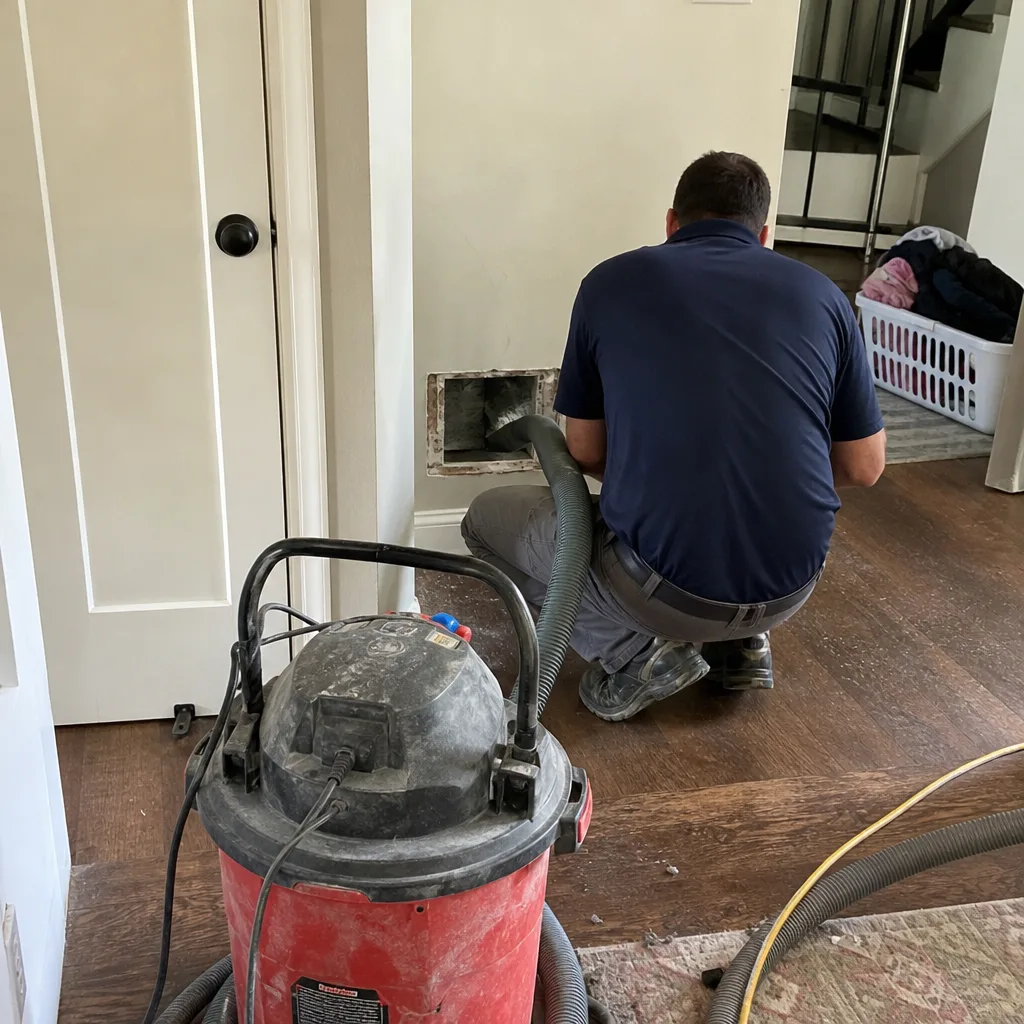
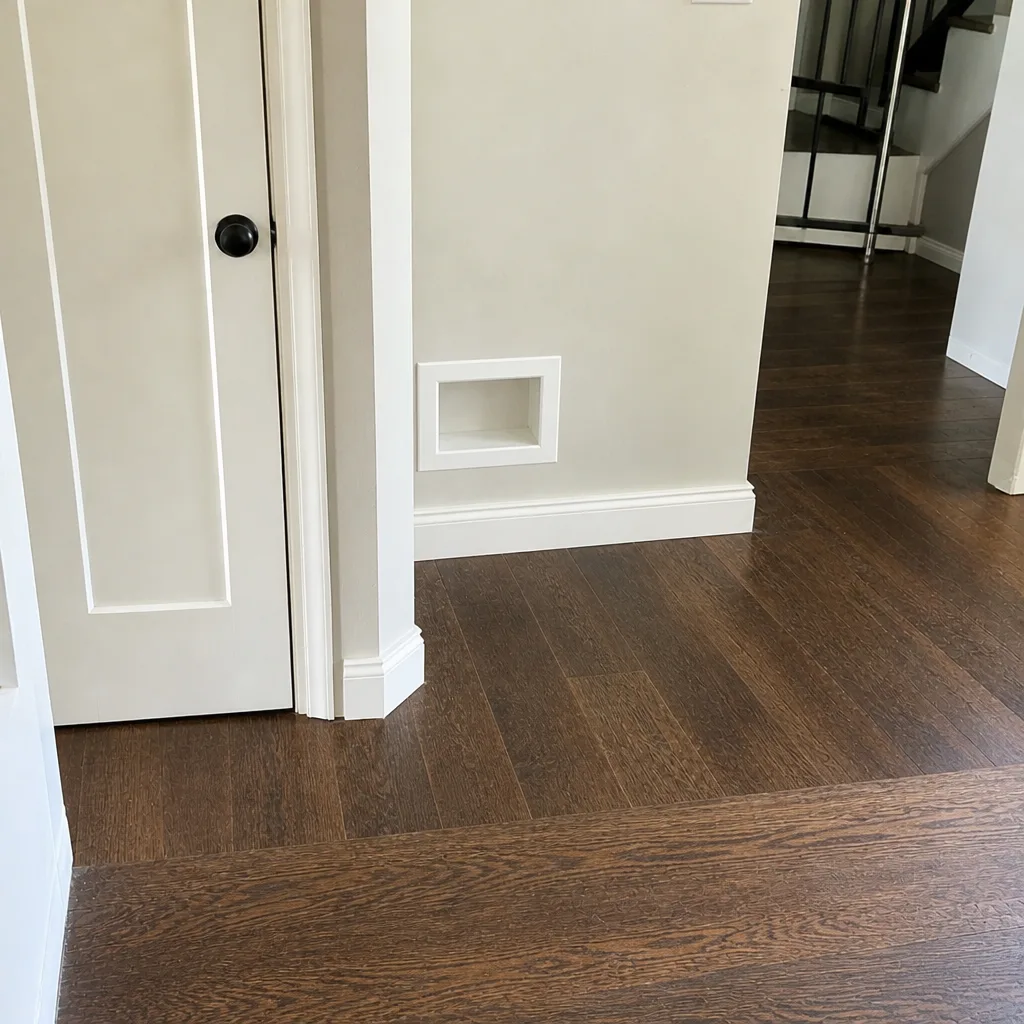
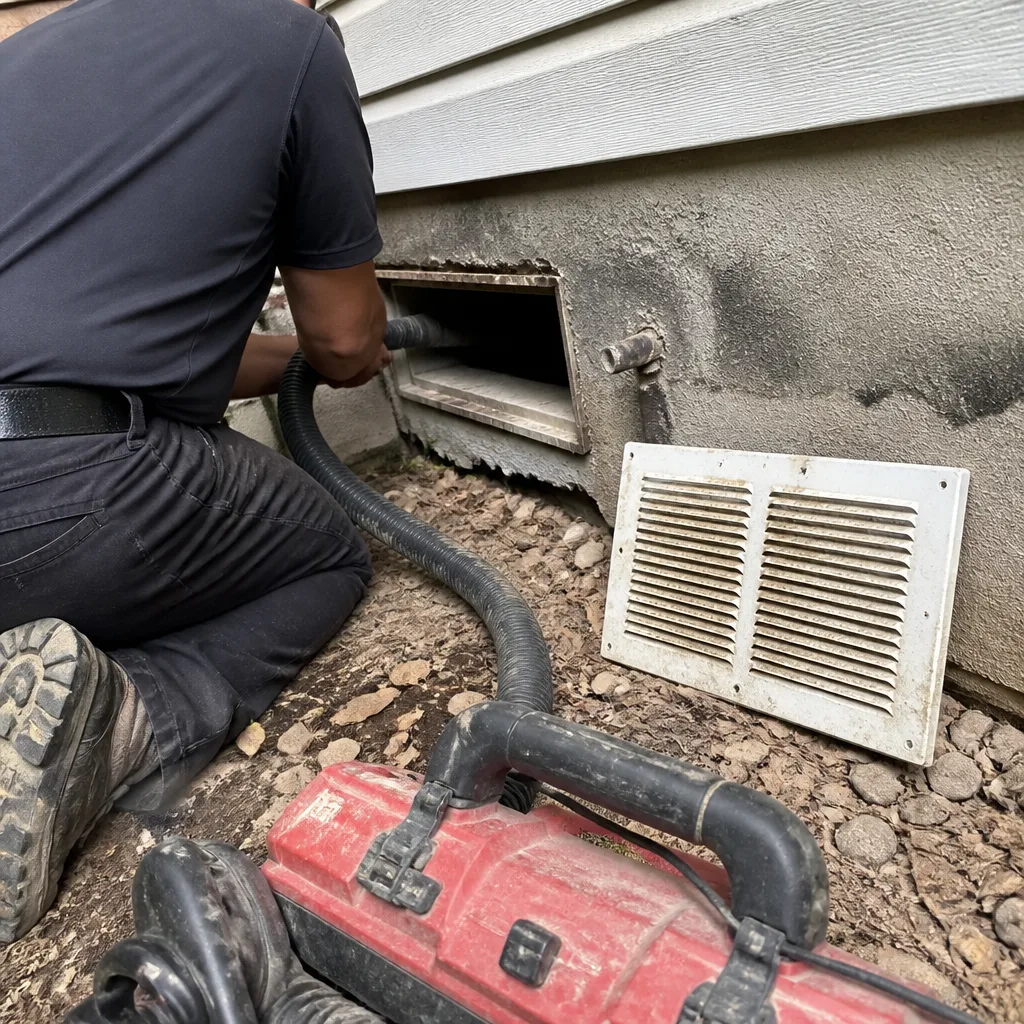
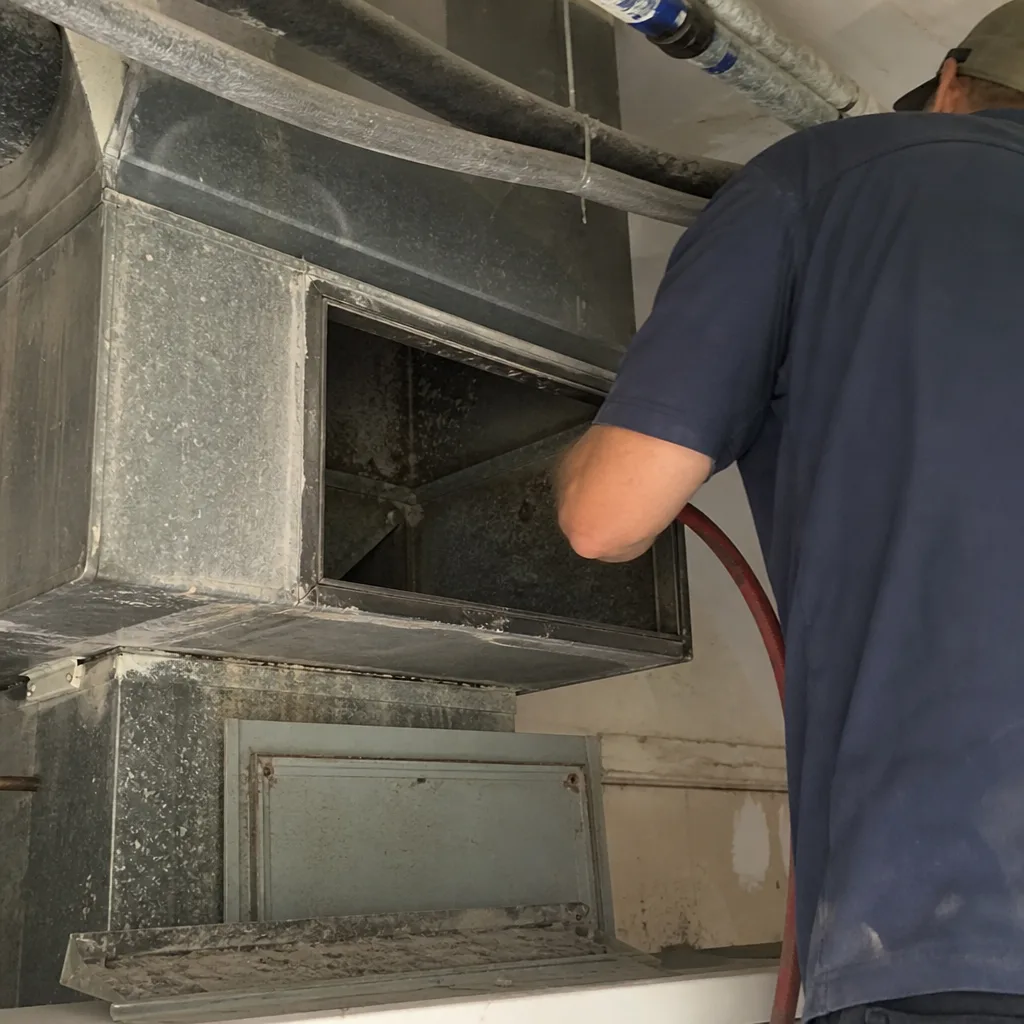
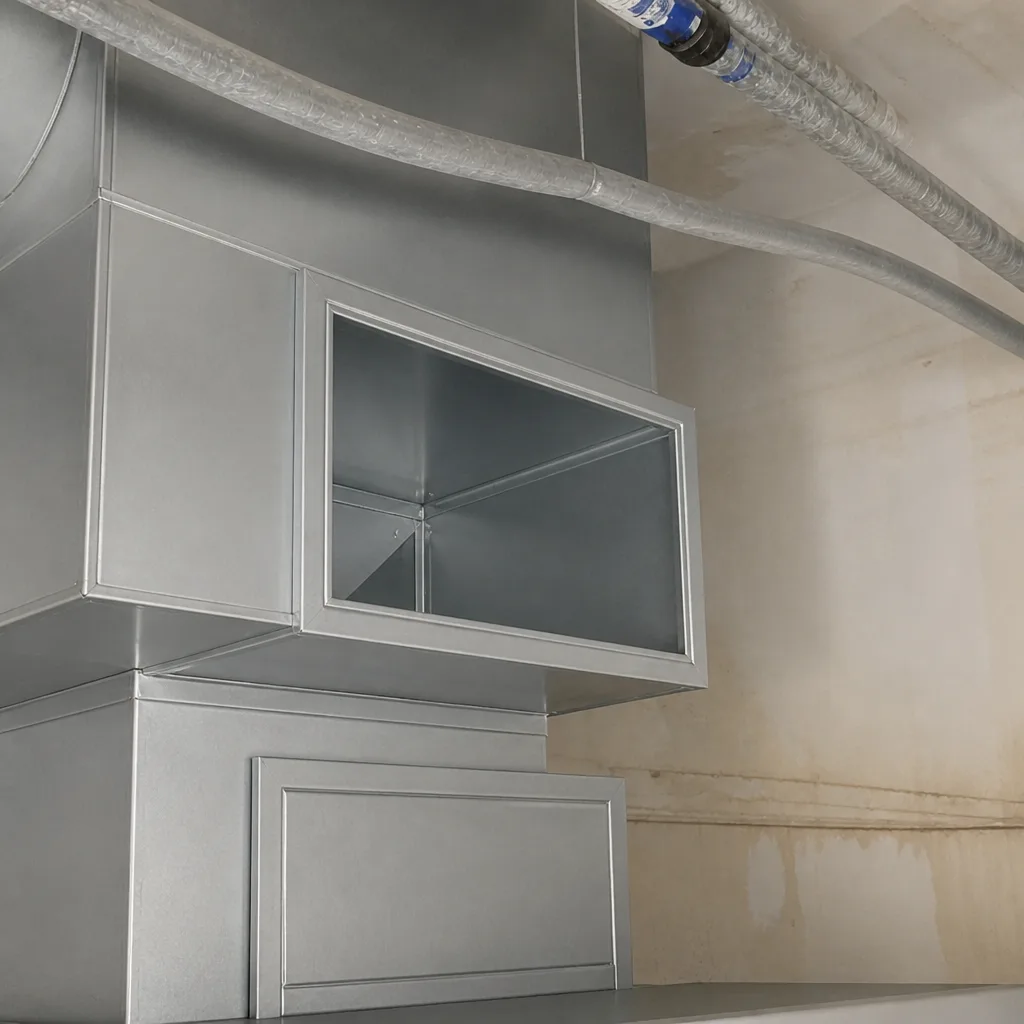
Whole-system duct and dryer vent check with before-and-after photos - you see exactly what came out of your vents
That "$99 whole-house special" is a bait ad - the real number appears once they are in your hallway, or the "clean" is a shop-vac at the register. We photograph the inside of your ducts before and after instead.
Air Duct Cleaning Maintenance Checklist for Saratoga Springs Homeowners
Most homeowners treat duct cleaning as a once-a-decade event, something to schedule when the air smells off or the vents look furry. That’s backwards. The house doesn’t tell you when the ducts are dirty – it tells you when they’re leaking, when the filter is starving, when a return has come loose behind a wall. If you only ever clean, you’re treating the symptom. The real work is a short, repeatable checklist that catches the upstream causes of contamination before they become a full remediation job. This guide walks Saratoga Springs homeowners through a maintenance calendar built for Utah Valley conditions, from spring inversion season through the winter heating ramp-up, and covers what you can audit yourself versus what needs a professional tool.
Quick Answer
A practical air duct maintenance checklist for Saratoga Springs homeowners covers four things every season: filter health, accessible duct connections, register airflow balance, and humidity. You should clean the full duct system every three to five years in most homes – sooner after major renovations or a new-home purchase – and check filters every 60 to 90 days. The items that need professional tools, like pressure testing and camera inspection, are worth booking annually so you catch problems early.
Replacing a MERV-8 filter every 90 days while leaving an unsealed return plenum is like mopping the floor with the faucet still running. The filter can’t compensate for a leaking duct system pulling unfiltered air from your crawlspace or attic.
Styles & brands we work with
- Whole-home duct cleaning
- Dryer vent cleaning
- Camera inspection
- Sanitizing & deodorizing
Table of Contents
- Why duct system maintenance is a checklist, not a one-time job
- The Saratoga Springs seasonal duct maintenance calendar
- Filter selection guide for Utah Valley’s particulate load
- How to visually inspect accessible duct connections yourself
- Warning metrics you can track without equipment
- What a diligent homeowner can self-audit vs. what needs a pro
- When to schedule a full system cleaning
- Common mistakes to avoid
- When to call a professional
Why duct system maintenance is a checklist, not a one-time job
Picture a typical Saratoga Springs home during a spring dust event. The HVAC system is running, pulling outdoor air through every gap in the return side, mixing it with conditioned air, and distributing it through the supply trunks. If a return duct connection has slipped off its collar behind a wall, that return is now pulling from the unconditioned attic or crawlspace instead of the living space. The filter at the air handler is doing its job on the wrong air stream. This is the pattern we see most often, and it’s why our team treats duct work as a system problem: one loose connection upstream can undo months of filter discipline.
Three parts of the system need regular attention:
- Filtration. The air handler filter protects the blower and coil, but only if the return side is sealed and the filter is the right MERV for the system’s static pressure budget.
- Sealing. Every joint, collar, boot, and accessible plenum is a candidate for a leak. Loose flex duct pulls are the most common. Duct repair and sealing fixes the root cause; cleaning alone just sweeps the surface.
- Humidity. Utah Valley sits in a semi-arid climate with dry winters and monsoon moisture arriving in late summer. Indoor humidity swings between the two – a duct system that runs through a crawlspace or attic will pick up moisture during monsoon weeks, and that’s when microbial growth starts in ducts that aren’t properly sealed and sanitized.
Cleaning addresses the accumulated debris. Maintenance prevents the debris from returning.
The Saratoga Springs seasonal duct maintenance calendar
The spring inversion season, summer wildfire smoke, fall HVAC switchover, and winter heating ramp-up each put stress on your duct system in a different way. Here’s a month-by-month calendar we recommend to Saratoga Springs homeowners. Adjust by two weeks in either direction based on when your seasons actually arrive.
- January – February (heating peak): Check the filter every 30 days, not 90. Furnaces run longer, so filters load up faster. Look at the return register nearest the kitchen for soot or gray film; that’s a sign of a leaking plenum or a blower drawing from a dirty space.
- March – April (spring inversion season): Utah Valley experiences temperature inversions in spring that trap particulates close to the ground. Replace the filter at the start of the inversion season, not during it. If anyone in the house has allergies, consider upgrading to MERV-11 during this window.
- May (switchover prep): Before the first AC run, walk every accessible duct connection. Check flex duct collars at the air handler, the supply boots, and any visible trunk in the basement or garage ceiling. Re-secure anything that’s slipped.
- June – August (wildfire smoke season): Smoke from regional fires drifts into Utah Valley. Keep windows closed, run the AC on recirculate if your thermostat allows, and consider MERV-11 if your system’s blower can handle it. Re-check filters monthly.
- September – October (fall switchover): The HVAC system changes mode. This is the ideal window for a full-system professional evaluation, since filters, coils, and duct connections are all inspectable before the heating season starts.
- November – December (heating ramp-up): Before the first hard freeze, confirm the return plenum is sealed and the filter MERV hasn’t been pushed too high for the system. A clogged or over-restrictive filter during the heating season is one of the most common causes of high utility bills.
We use Rotobrush and Nikro equipment on full-system cleanings because the source-removal contact head is what gets the debris out of the duct, not just loosened. If you’re scheduling a seasonal cleaning, that’s the equipment to ask about. For a deeper dive on what a full cleaning involves, see our page on air duct cleaning.
Filter selection guide for Utah Valley’s particulate load
Filter MERV is a tradeoff, not a ladder. Higher isn’t better past a point. The MERV number tells you the size of particles captured, but it also tells you how much resistance the filter adds to the air stream. An older blower rated for a specific static pressure can’t push enough air through a MERV-16 filter on a 1-inch slot. When it can’t, the symptoms show up as rooms that won’t heat or cool, a blower that runs constantly, and coils that frost over.
Here’s how we think about it for Saratoga Springs homes:
- MERV-8 (baseline): Adequate for most homes with a 1-inch filter slot and a standard blower. Change every 60 to 90 days, 30 in winter.
- MERV-11 (moderate upgrade): Reasonable for allergy-sensitive households in Saratoga Springs during spring inversion and summer smoke season, if you have a 4-inch or 5-inch media cabinet. Change every 6 to 12 months based on manufacturer guidance.
- MERV-13 (high filtration): Only for systems with a properly sized media cabinet and a blower spec that supports it. We see these installed in newer Saratoga Springs homes where the builder spec’d a 4-inch cabinet, but never assume. Verify the blower’s rated static pressure before upgrading.
- MERV-16 or higher: Rarely appropriate in a residential retrofit. If you’ve been sold one for a 1-inch slot, the filter is probably starving your coil.
Honeywell and Aprilaire media cabinets are the two we service most often, and their filters hold up well in this climate because the media pleats are deep enough to hold a full season of particulates without excessive restriction. If you’re not sure which cabinet you have, look at the filter thickness. One inch means standard slot. Four or five inches means media cabinet.
How to check if your filter is too restrictive
There’s no gauge on a residential air handler, but you can observe one symptom: temperature split. With the system running, measure the air temperature at a supply register and a return register with an infrared thermometer. A 15 to 20 degree difference between supply and return is normal for cooling. If the split is much larger or the system runs continuously and never satisfies the thermostat, the filter or a duct leak is restricting airflow. A quick fix is to swap down one MERV step and watch whether the symptoms clear.
How to visually inspect accessible duct connections yourself
You don’t need tools to spot the most common duct problems. You need a flashlight and fifteen minutes at the start of each season. Here’s a step-by-step, and what “good” versus “bad” looks like at each stage.
- Start at the air handler. Locate the unit – usually in the garage, attic, or a mechanical closet. Follow the return duct where it meets the air handler. A proper connection is held by a metal collar with mastic or foil tape covering the joint. A loose connection shows a visible gap, an undersized collar, or duct tape peeling away from the joint.
- Look for flex duct pulling away. The inner liner of a flex duct should be inside the collar and held by a zip tie or clamp. If the outer sleeve has slipped off and the inner liner is exposed, the duct is losing air and pulling in debris. This is the most common issue we find in Saratoga Springs homes, especially at boots behind registers.
- Check the supply boots at each register. Remove the register grill and look at where the duct connects to the boot. The boot should be sealed to the drywall or subfloor with mastic or a gasket. If you see daylight or feel air moving around the boot perimeter, that’s a leak.
- Inspect visible trunk line in the basement or garage ceiling. Seams should be taped or mastic-sealed. Watch for sagging flex duct that runs longer than about 6 feet between hangers – sag adds resistance and traps debris.
- Look at the filter slot. If the filter is bypassing around its edges because the slot is wider than the filter, unfiltered air is getting past it entirely. A simple frame fix restores filtration.
Properly secured flex duct will have the inner liner full inside the collar, the outer sleeve wrapped back over it, and a zip tie or clamp biting into the collar itself. It won’t move when you press on it. A loose connection has a visible gap, sags away from the collar, or lets you slip a fingernail underneath.
Warning metrics you can track without equipment
Static pressure is the diagnostic a professional measures with a manometer, but you can observe its effects without any tool at all. Here are the signals we ask Saratoga Springs homeowners to watch for:
- Rooms that won’t heat or cool, but only some rooms. Uneven temperature throughout the house is the classic sign of a restricted filter, a kinked flex duct, or a leaking trunk that’s bleeding pressure before reaching the far registers. If the room closest to the air handler is fine and the far bedroom is not, suspect a duct problem rather than a thermostat problem.
- Utility bills that climb without an obvious cause. A duct system leaking 15 to 25 percent of its conditioned air (a commonly cited figure for unsealed residential duct systems) makes the HVAC run longer to satisfy the thermostat. If the bill jumps and the weather hasn’t changed, walk the accessible ducts.
- Register airflow balance. Hold a tissue or lightweight streamer at each register. Every register should have visible pull and movement. A register that’s barely moving air when the system is on is a warning sign. Check the boot seal and the flex connection at that register.
- Whistling or whooshing at a register. That’s static pressure finding a small gap. Usually a filter that’s too restrictive or a boot that’s undersized.
- Dust settling on horizontal surfaces faster than usual. New dust on the kitchen counter every few days can mean the return is pulling from an attic space. If you clean and the dust returns within a few days, look at the return duct connection.
None of these require a tool. All of them are worth a call to a specialist if they persist after a filter change and a visual check.
What a diligent homeowner can self-audit vs. what needs a pro
We respect a homeowner who wants to do what they can. Here’s the honest split. Some of the checklist is doable on your own. Some of it needs a tool that costs more than the service call.
What you can self-audit:
- Filter size, MERV, and change interval.
- Visual inspection of accessible duct connections, as described above.
- Register airflow check with a tissue or streamer.
- Temperature split at supply and return, using an infrared thermometer.
- Utility bill tracking, month over month, to catch unexplained spikes.
- Humidity readings with a cheap hygrometer (indoor should stay between 30 and 50 percent).
What needs a professional tool:
- Duct pressure testing. A calibrated manometer measures total external static pressure at the air handler. This is the only reliable way to know whether the system is starving for air, and it’s the tool that answers the MERV question definitively.
- Camera inspection. A duct camera sees inside the trunk runs and branches to check for debris accumulation, microbial growth, or disconnected sections behind drywall. You can’t see this from a register.
- Sanitizing and remediation. If microbial growth is present, the volume of chemical treatment, dwell time, and containment matter. We use Abatement Technologies negative-air containment and Guardsman protocols because the containment is what keeps the sanitizing process from redistributing spores through the house.
- Sealing and repair. Mastic application from inside the duct, repairing a crushed trunk, or replacing a disconnected branch – all of these require access, tools, and knowing where not to cut.
We carry Honeywell and Aprilaire media cabinets and service them as part of the same visit, so a homeowner isn’t chasing down a second contractor for the filter housing upgrade. And because duct repair and sealing are part of our service scope, we can fix what we find rather than just note it on a report. If you’re not sure whether your system needs a repair or a cleaning, our HVAC cleaning page explains the difference.
When to schedule a full system cleaning
A full-system cleaning is worth scheduling every three to five years in most Saratoga Springs homes. Here’s the list of triggers that move the interval up:
- Recent major renovation or construction in the home – drywall dust and sawdust migrate through the return side and settle in the trunk.
- New-home purchase – you don’t know what the previous owners did, so treat it as a clean baseline.
- Post-move-in from a household with pets or smokers.
- Visible debris on the register fins or the inside of a supply boot.
- Persistent musty odor from registers when the system first turns on.
- A recent microbial or moisture issue in the crawlspace or attic.
- New HVAC installation, as a clean-start baseline.
Dryer vents are a separate service and worth doing more often than most homeowners realize. Lint accumulation in the dryer vent line is a fire risk, and dryer-only venting companies often don’t touch it. Since we handle dryer vent cleaning on the same visit as duct work, the maintenance window aligns naturally. Schedule them together once a year.
If your system uses a UV or filtration add-on like an Aprilaire or Honeywell media cabinet, the cabinet filter and the duct cleaning should happen together. A clean duct downstream of a dirty media cabinet is fighting itself.
Common Mistakes to Avoid
- Assuming a filter change is duct maintenance. The filter protects the equipment, not the ducts. Filtration is one part of the checklist, but a clean filter does nothing for a duct system pulling unfiltered air through a loose return.
- Upgrading to the highest MERV you can find. In most older Saratoga Springs homes with 1-inch filter slots, MERV-13 and higher can starve the blower and shorten equipment life. Match MERV to the cabinet and blower spec, not to the marketing on the filter package.
- Skipping the visual duct inspection because the air smells fine. Odor is a lagging indicator. By the time a homeowner smells something off, the contamination has been building. A flashlight check at each season’s start catches the leak before the smell.
- Assuming the crawlspace duct isn’t part of the system. In Saratoga Springs homes with crawlspaces or garage-mounted air handlers, the longest duct runs are the ones most likely to fail. Inspect them at least once a year.
- Choosing a duct company based on the coupon price. A low headline price often becomes a per-vent add-on once the technician is on site. Ask for a flat price per system and before-and-after photos of your ducts before the work starts.
- Ignoring the dryer vent. It’s not part of the air system, but it’s part of the same maintenance window. A blocked dryer vent is a fire risk; cleaning it as part of an annual visit costs less than treating it as an emergency later.
- Thinking inverted outdoor air is harmless. Spring inversions in Utah Valley trap PM2.5 close to the ground. If your filter is bypassing through a loose slot, the system is moving that particulate straight into the living space.
When to Call a Professional
Call a specialist if any of the following are true for your Saratoga Springs home: you’ve found a loose duct connection you can’t safely access, your utility bill has climbed without an obvious cause, one or more rooms won’t heat or cool while others do, you smell a musty odor from registers when the system runs, or you’ve noticed visible debris inside a register boot. Also call if you’re not sure which MERV your system can handle – a static pressure test answers the question definitively, and guessing wrong with a high-MERV filter can restrict airflow and damage the equipment.
We also want to be clear about what needs caution: gas-fired furnaces and electrical panels in the air handler closet are not DIY territory. If a duct issue requires moving a gas line or opening the electrical panel, that work needs a licensed professional, not a homeowner with a YouTube video. The visual check is yours to run. The moment it involves gas or high voltage, call in a pro.
Saratoga Springs Air Duct Cleaning Pros offers free estimates in Saratoga Springs – call (844) 542-4260. We answer 24/7. Fast dispatch from 7am to 7pm, Sunday through Friday. Our technicians have up to 8 years of experience, and the local pro we connect you with is licensed and insured as their state requires.
See the difference
 Before
 After
 Before
 After
 Before
 After
Frequently Asked Questions
Every three to five years is the typical interval for most Saratoga Springs homes, but the real trigger is local conditions. Spring inversions, summer wildfire smoke, and fall heating switchover all push debris into the return side faster than a generic national timetable would suggest. If your house has pets, recent renovation, or a new-home-purchase baseline to establish, tighten the interval. A full system cleaning paired with duct repair and sealing is the durable solution. Call (844) 542-4260 for an exact quote – estimates are free.
Only if your system has a 4-inch or 5-inch media cabinet and a blower that can handle the added restriction. In a 1-inch filter slot, MERV-11 often starves the system and pushes static pressure high enough to harm the blower. If you want MERV-11 for allergy or wildfire-smoke season, verify the cabinet size first. A static pressure test removes the guesswork.
The inner liner is exposed outside the collar, the outer sleeve has slipped back, or you can see a gap where the duct meets the boot. Properly secured flex duct has the inner liner full inside the collar with the outer sleeve wrapped back over it and a zip tie or clamp biting into the collar. If you can slide a fingernail under the connection, it’s loose.
No, not the full system. A shop vac addresses debris at the register and the first foot of duct, but the trunk lines and branch runs need a source-removal contact head (like Rotobrush or Nikro) with the correct vacuum and agitation to pull debris out rather than redistributing it. Surface cleaning at the register is fine as a stopgap, but it doesn’t replace a full-system clean.
Because the low quote is often a per-vent headline price that becomes a much larger invoice once the technician is on site, or it’s a surface vacuum that never touches the trunk. The right question isn’t “how much is a duct cleaning,” it’s “is this a flat price per system, and can you show me before-and-after photos of my own ducts?” Get that in writing before any work begins. Call (844) 542-4260 for an exact quote – estimates are free.
Ask for before-and-after photos of your own ducts, not stock photos. A source-removal clean is verifiable by looking inside an access point before and after. A company confident in its process will show you the change. If a crew can’t produce photos of your system, that’s your cue to ask why. Call (844) 542-4260 to schedule an estimate and see how the process is documented.
Cleaning removes accumulated debris; repair and sealing fix the leaks that let debris back in. Both belong on the same maintenance checklist. We run Saratoga Springs Air Duct Cleaning Pros as a single point of contact for both because a clean duct behind an unsealed return is a clean duct pulling in the crawlspace again by next season.
The Bottom Line
The checklist works because it’s small and repeatable: check the filter every 60 to 90 days, walk the accessible duct connections at each season’s start, watch register airflow and the utility bill, and schedule a full-system professional evaluation every three to five years. Saratoga Springs conditions – spring inversions, summer wildfire smoke, and dry winters with monsoon humidity swings – push the schedule a little tighter than the generic national advice. Do the self-audit items yourself. Call a pro for the pressure test, camera inspection, sealing, and any work that involves gas or electrical. Cleaning handles what’s there; maintenance keeps it from coming back.
Call (844) 542-4260 for a free estimate on duct cleaning, dryer vent cleaning, HVAC cleaning, duct repair and sealing, or air quality sanitizing in Saratoga Springs. We answer 24/7. Fast dispatch from 7am to 7pm, Sunday through Friday.
Written by the team at Saratoga Springs Air Duct Cleaning Pros.