
Last updated November 23, 2026
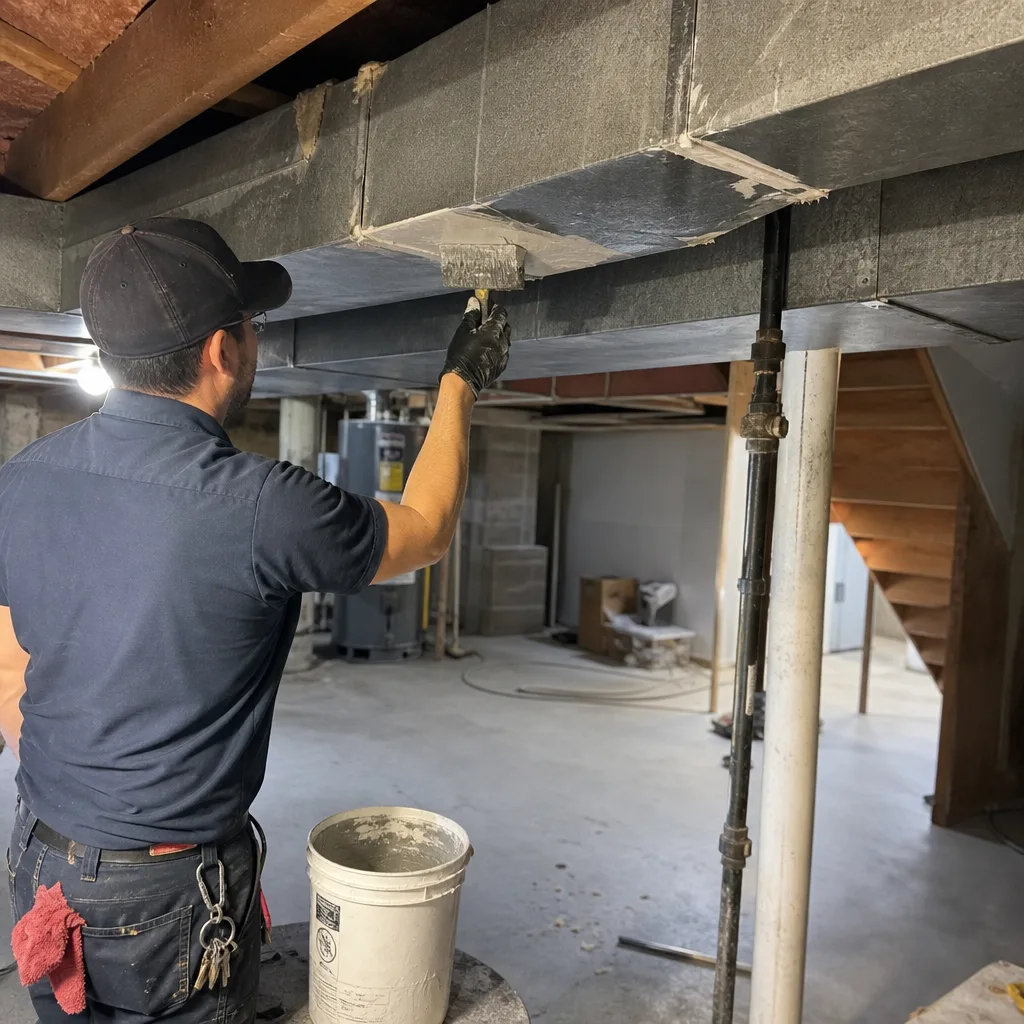
 Whole-home duct cleaning
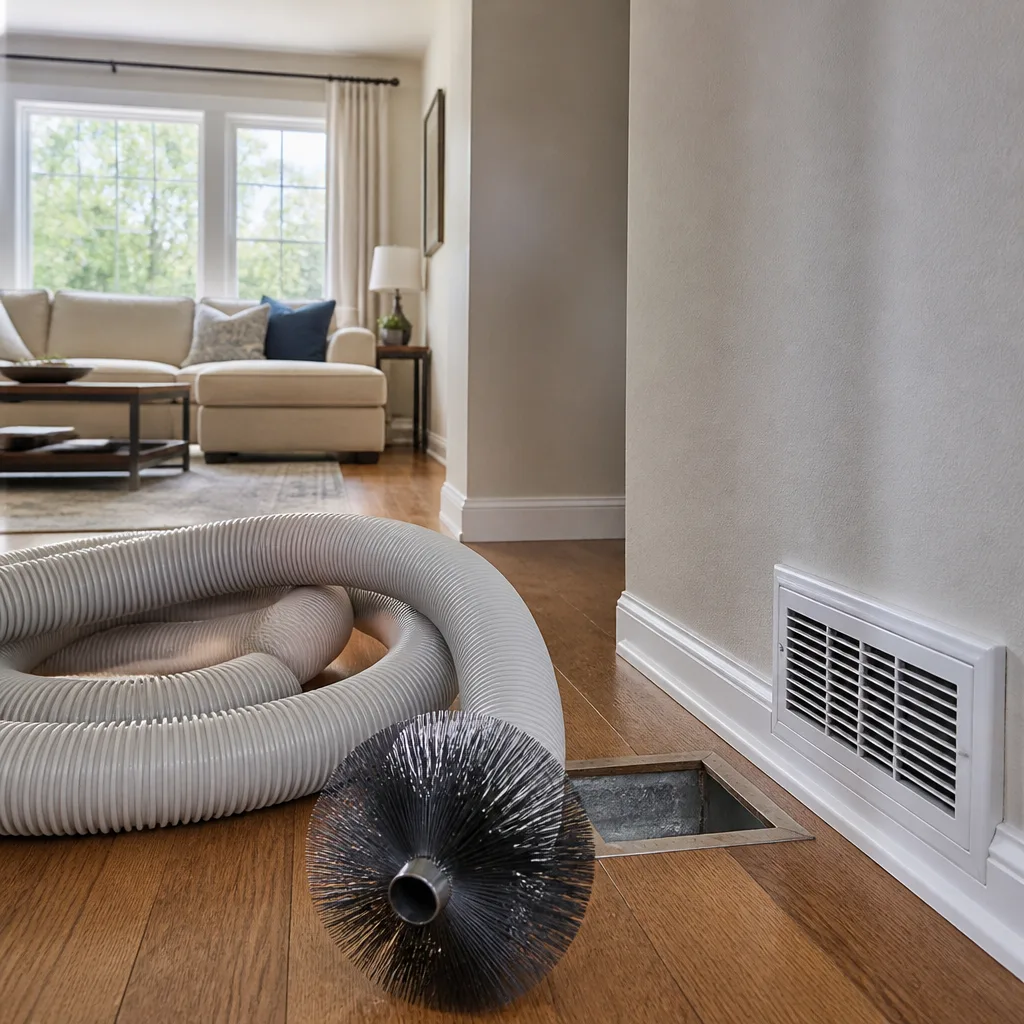
 Dryer vent cleaning
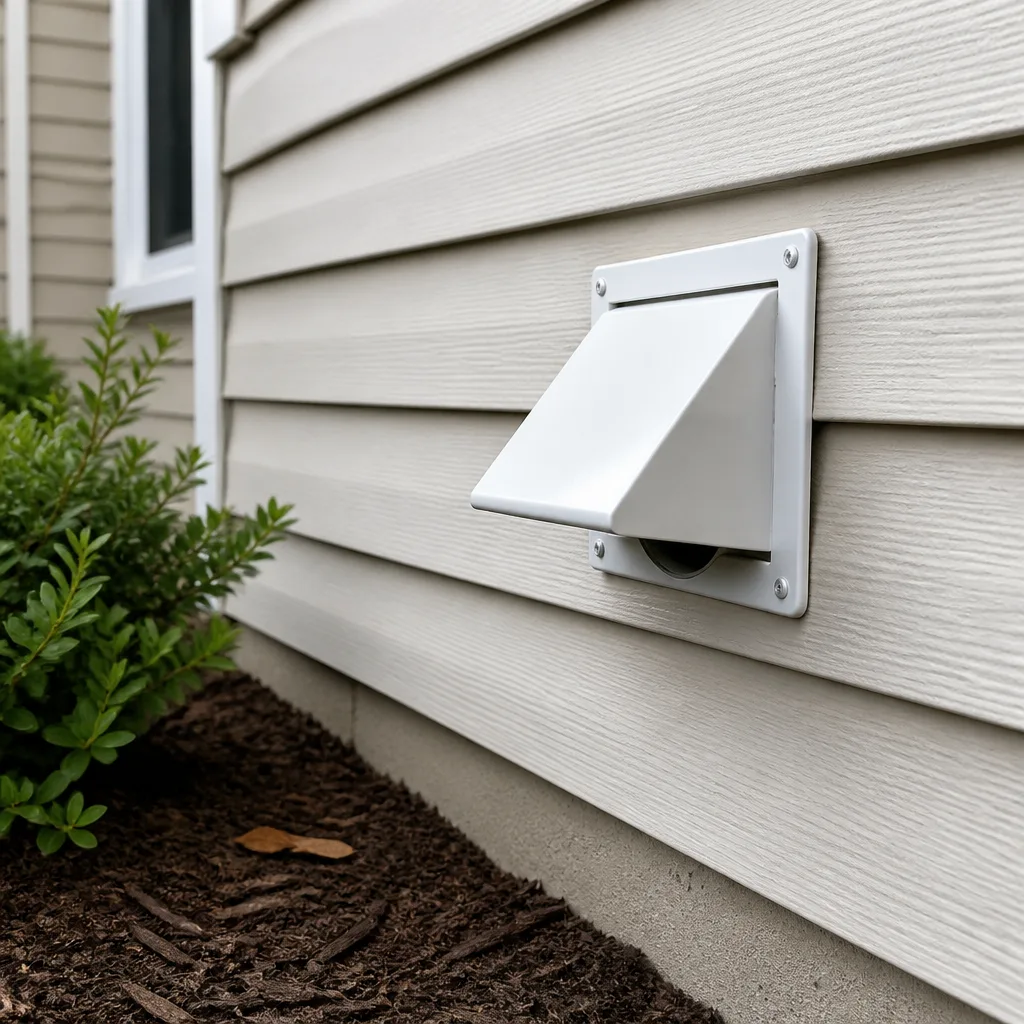
 Camera inspection
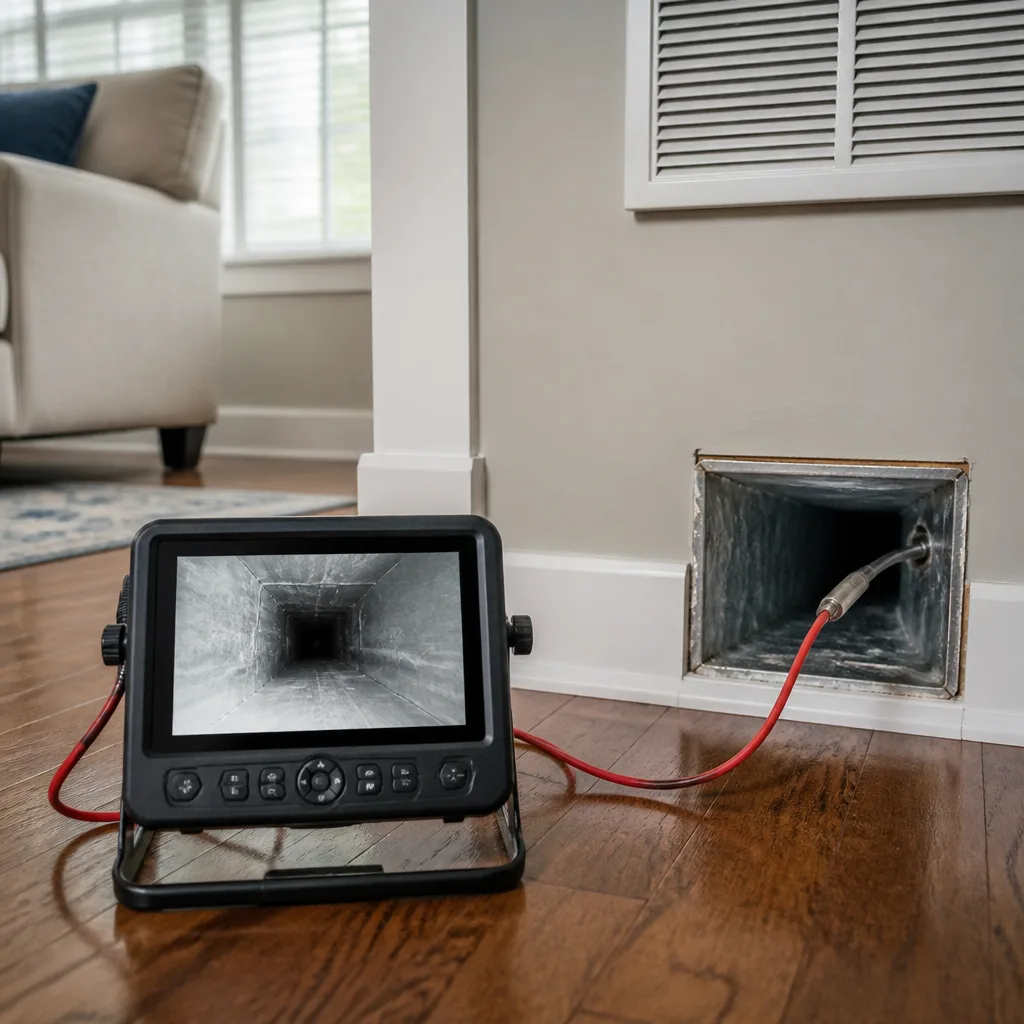
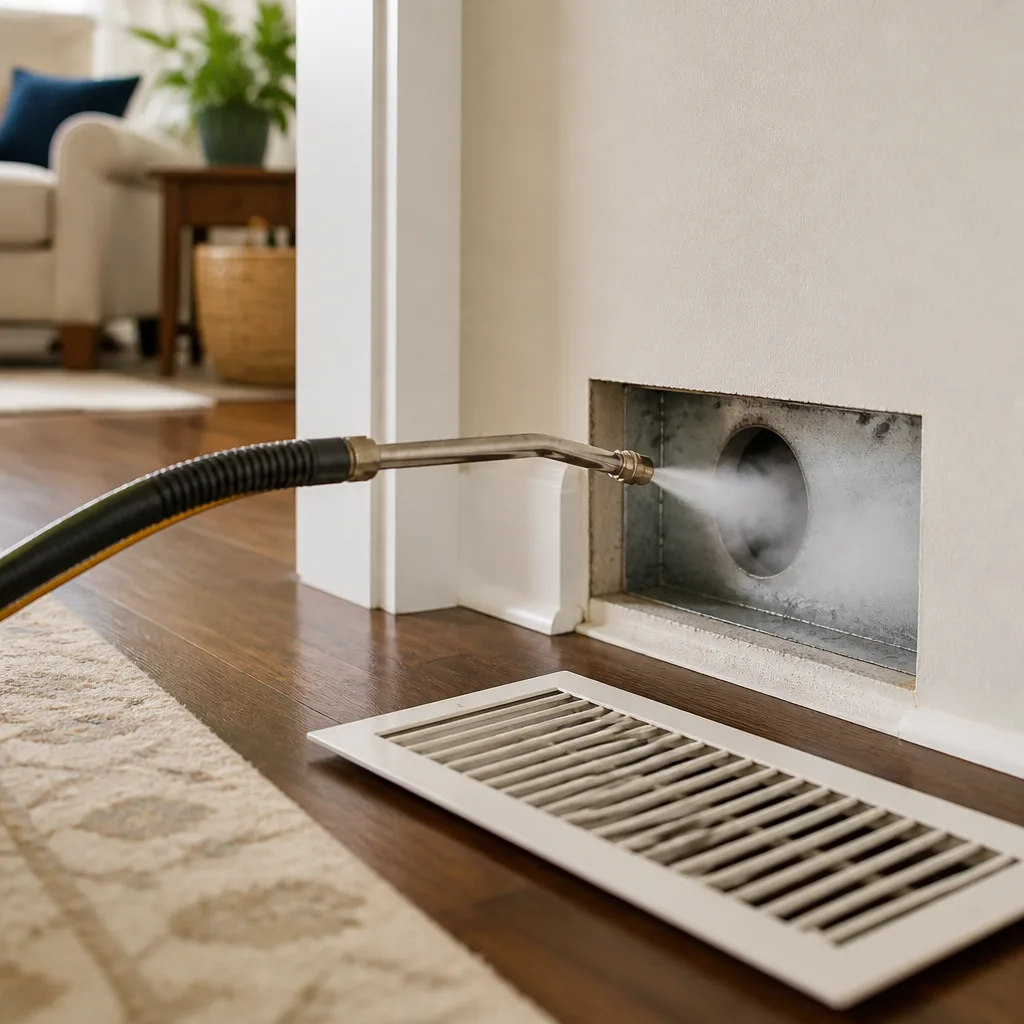 Sanitizing & deodorizing
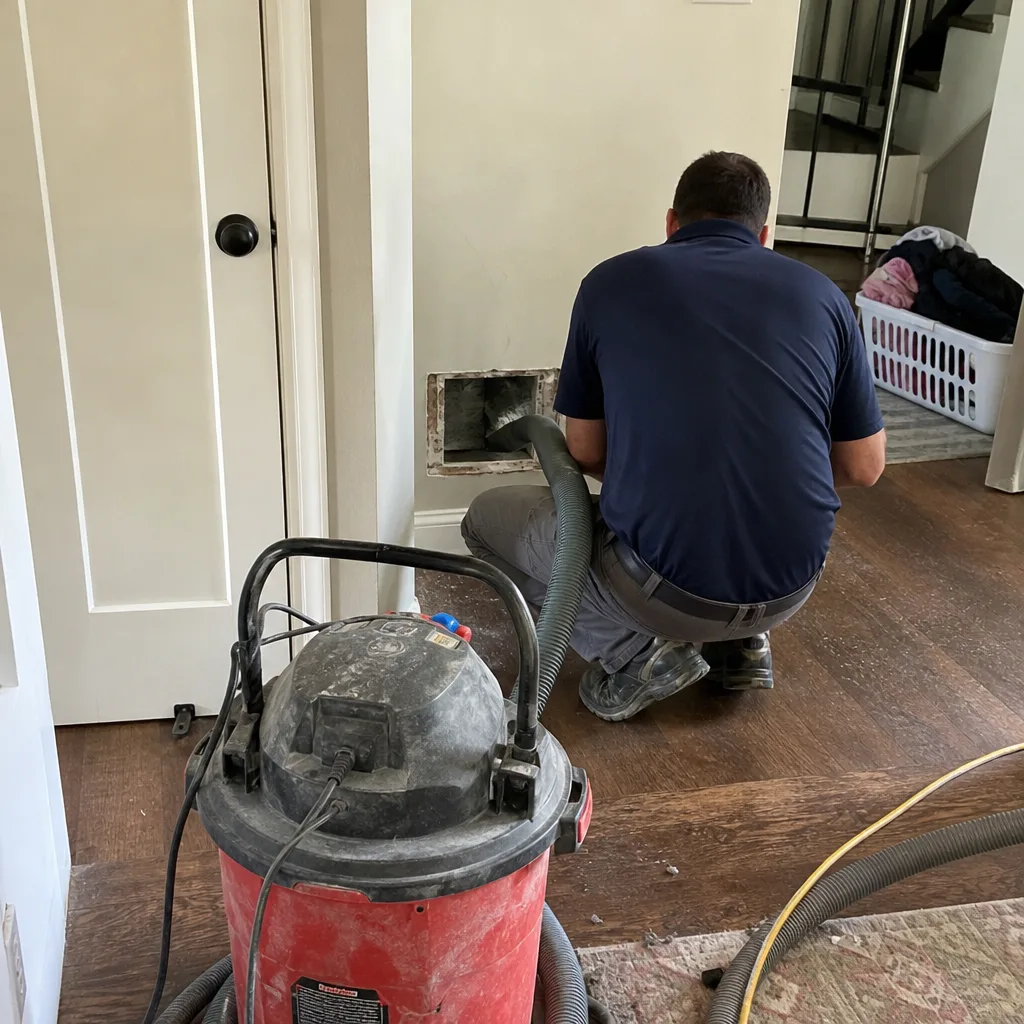
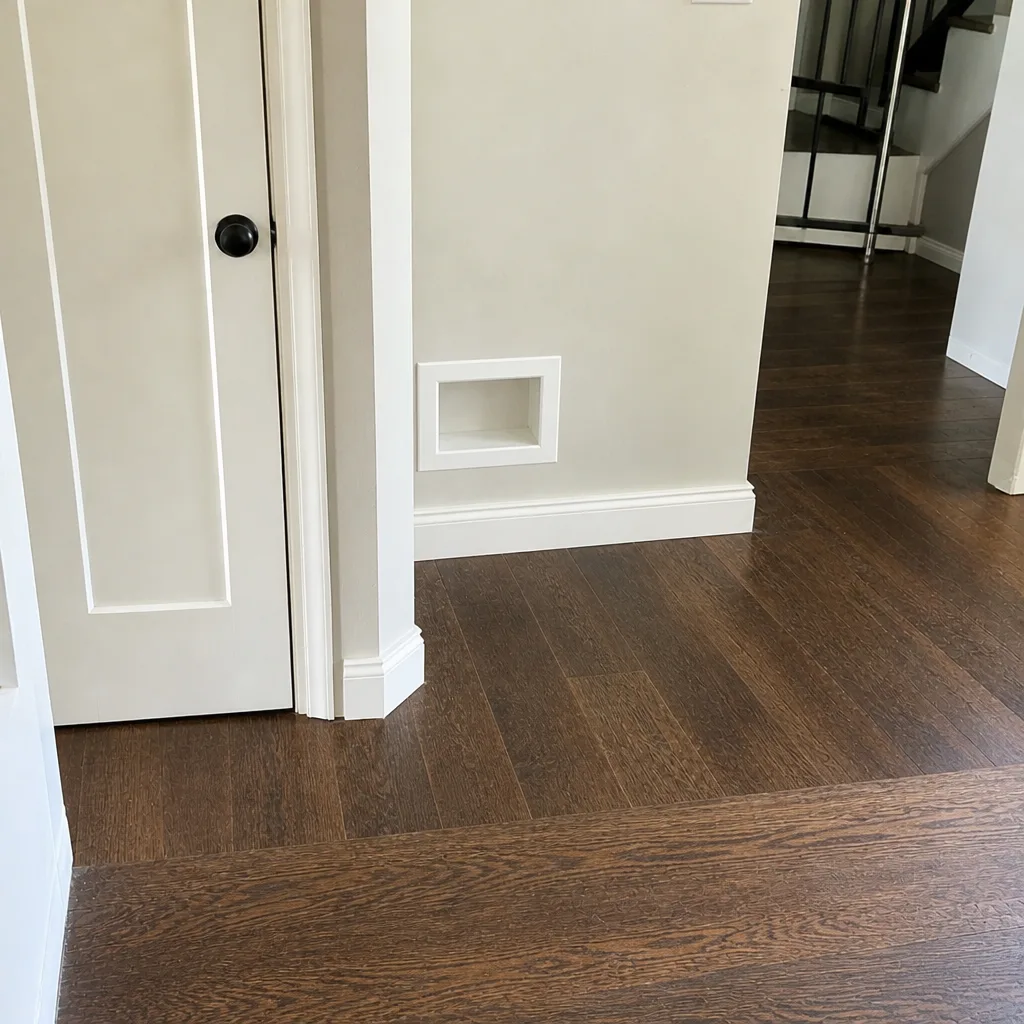
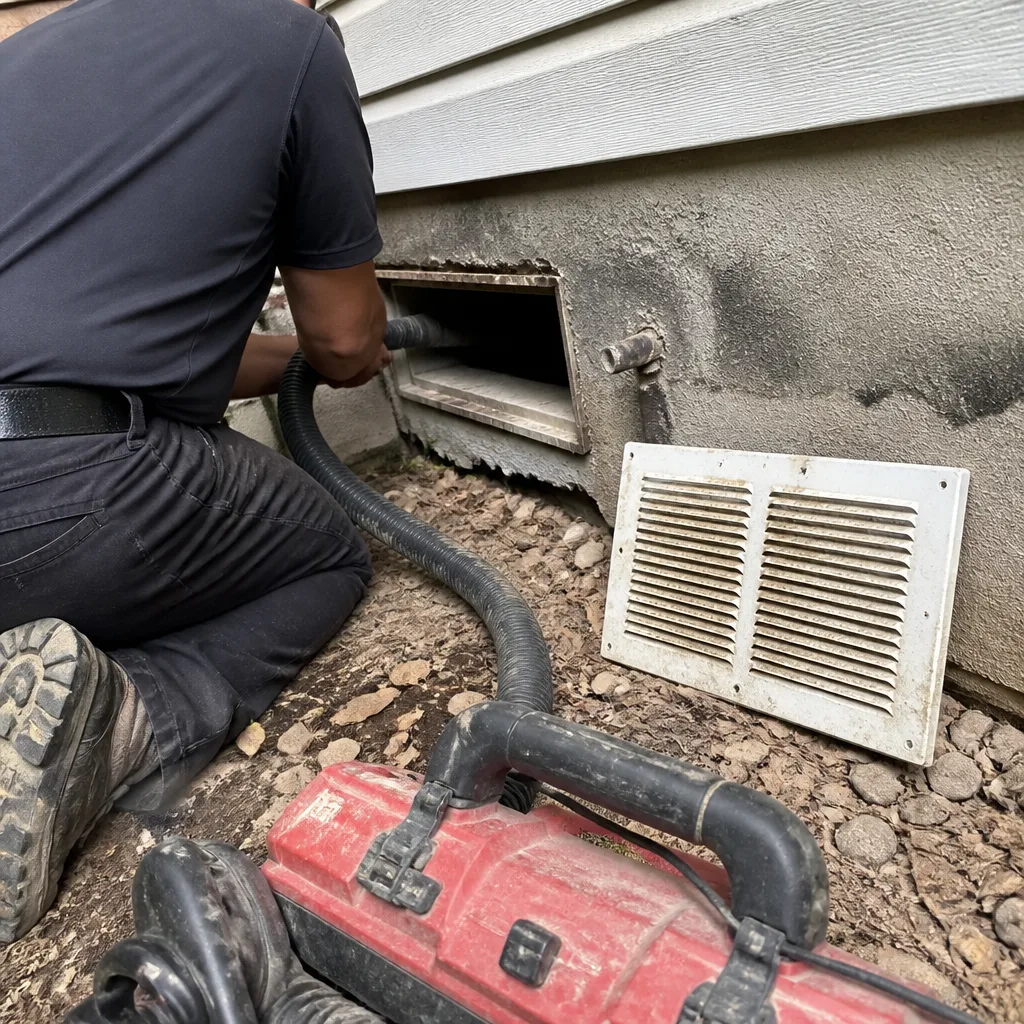
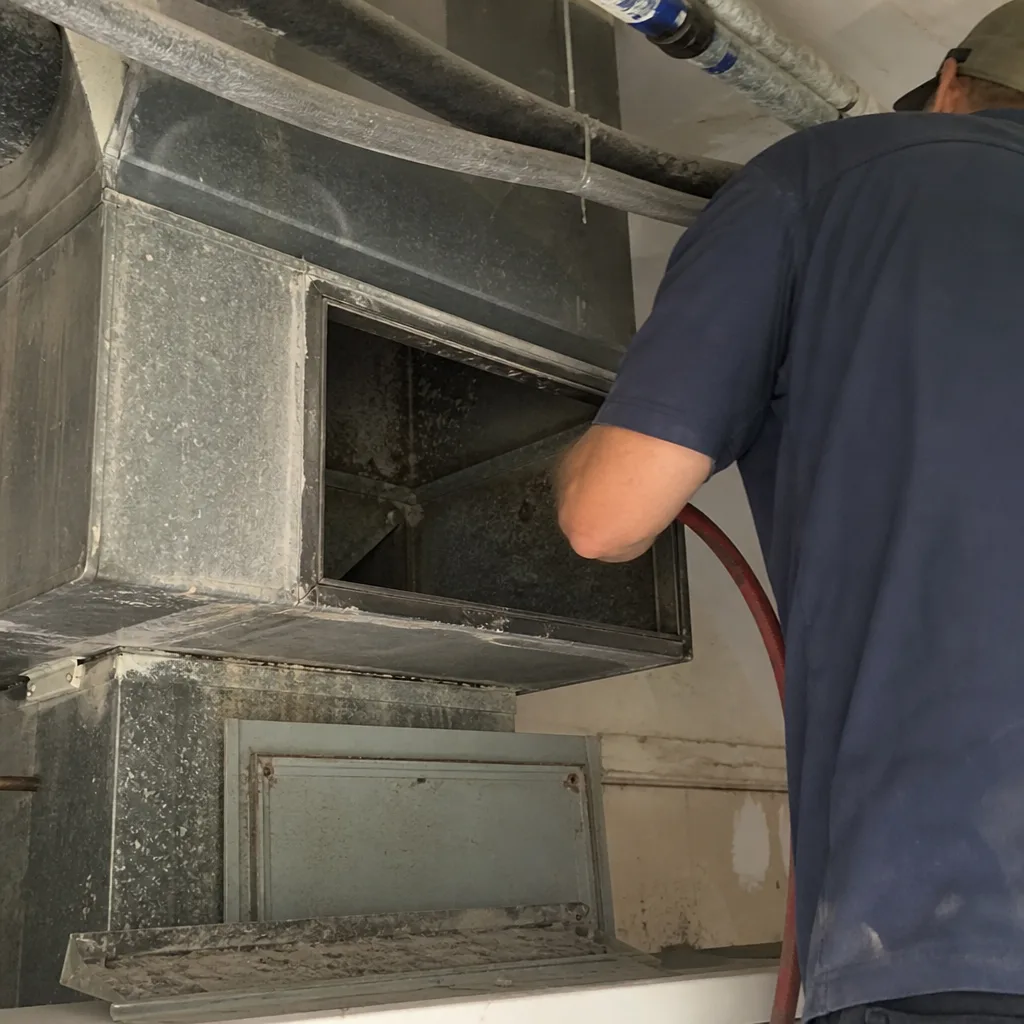
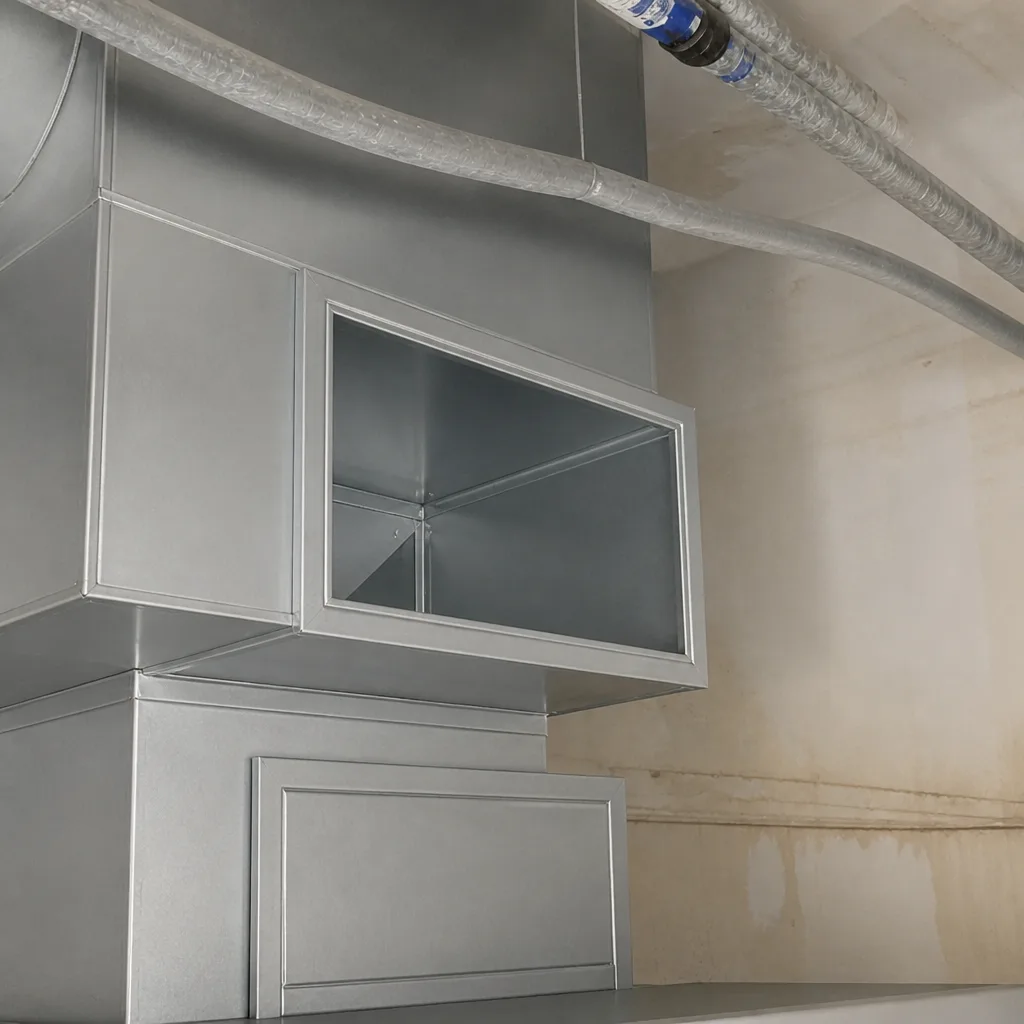
Whole-system duct and dryer vent check with before-and-after photos - you see exactly what came out of your vents
That "$99 whole-house special" is a bait ad - the real number appears once they are in your hallway, or the "clean" is a shop-vac at the register. We photograph the inside of your ducts before and after instead.
Air Duct Cleaning Emergency Preparedness Guide for Saratoga Springs Homes
When smoke rolls into Utah Valley, the instinct is to close the windows and stay inside. Which is right. But the step most Saratoga Springs homeowners take next, running the air conditioner or furnace to stay comfortable, is the one that can quietly work against them. Your HVAC system pulls return air from inside the house, and when outdoor air is thick with wildfire smoke, the system keeps cycling that air through the same ducts. Whatever gets pulled in gets deposited on duct walls, and it can sit there long after the sky clears. This guide covers what to do during and after a smoke event, how to handle a flood around below-grade ductwork, what to watch for during nearby construction, and how to document an emergency cleaning for an insurance claim.
Quick Answer
The best air duct emergency protocol for Saratoga Springs homes is to shut the HVAC system down when outdoor air quality is hazardous, run it on recirculate only if your system allows it, and schedule a professional cleaning and sanitizing within a few weeks of the event. For flooding, act within 48 to 72 hours, because mold colonization inside a wet duct system changes the scope of remediation entirely once that window closes. For construction dust, capture the source and clean the whole system, not just the visible vents.
Styles & brands we work with
- Whole-home duct cleaning
- Dryer vent cleaning
- Camera inspection
- Sanitizing & deodorizing
Table of Contents
- Wildfire Smoke Protocol: What to Do and When
- How to Tell If Smoke Actually Got Into Your Ducts
- Post-Flooding Steps for Below-Grade Ductwork
- The 48 to 72 Hour Mold Risk Window
- Construction Dust From Nearby Development
- Shutdown and Restart Protocol
- Documenting an Emergency Cleaning for Insurance
- When to Call a Professional
Wildfire Smoke Protocol: What to Do and When
Wildfire smoke behaves differently in a duct system than ordinary household dust. The particles are fine enough to stay suspended in air, and the compounds that give smoke its smell can cling to surfaces and release gradually. That’s why a house can still smell like smoke weeks after the air outside has cleared. In our experience, the homes that hold onto smoke odor longest are the ones that kept running the HVAC system continuously through the smoke event.
Here’s the protocol we recommend for Saratoga Springs homes when wildfire smoke reaches the valley:
- Shut the system down when outdoor air quality is hazardous. Turn the thermostat to off and leave the fan on auto, not on.
- Seal the obvious leaks. Close windows, tape or cover any window air units, and close the fresh-air intake if your system has one you can close.
- If you must run the system for temperature, run it on recirculate only. Check that your thermostat or air handler is set to indoor recirculation, so the system pulls no outdoor air.
- Upgrade filtration temporarily. A high-MERV filter, if your air handler is rated for it, captures more of the fine particles that would otherwise land in your ducts.
- Assess after the smoke clears. See the next section for the signs that smoke infiltrated your duct system.
- Clean and sanitize the system if the assessment points that way. Cleaning alone removes the particulate; sanitizing addresses the odor compounds.
If the smoke event was a short one and the system was off, you may be able to skip the cleaning. Saratoga Springs sits near the eastern foothills, and smoke days here tend to be episodic rather than weeks-long. A one-day event with the system off rarely contaminates a duct system. A week of smoke with the system running is a different story.
How to Tell If Smoke Actually Got Into Your Ducts
You don’t need to send a camera into the ducts to make a reasonable assessment. There are a few practical signs that the system pulled smoke into the ductwork. Any two of the following, especially after a multi-day smoke event, are enough to justify a cleaning.
- Persistent smoke odor at the registers. If individual supply vents still smell like smoke more than a week after the outdoor air cleared, the odor is likely coming from the ducts and not from the furniture.
- A visible film at the return grille. Look at your return-air grille with a bright light. A grey or black film on the grille or the grille collar is a sign of particulate accumulation.
- Smoke odor every time the system cycles on. The system acts like a bellows, pushing stored odor out of the supply registers each time it runs.
- Filter color after a couple of weeks. A filter that went from light grey to dark grey during the smoke event was working, and the dust it captured is a proxy for what got through to the ducts.
- Stale or heavy air in rooms closest to the air handler. Rooms near the air handler are often the first to show symptoms, because that’s where the system pulls the most air.
If the signs point to smoke infiltration, a full-system cleaning with sanitizing is the right response. Surface cleaning of the registers alone does nothing for the particulate and odor that sits further inside the trunk lines and branch runs. Duct repair and sealing, when leaks are present, keeps future infiltration out of the system.
If it turns out only the filter and the registers were affected, an air duct cleaning that includes the return and supply paths will clear most of the residue.
Post-Flooding Steps for Below-Grade Ductwork
Flooding hits a duct system differently depending on where the ducts run. Homes with a basement or a below-grade mechanical room often have ductwork running through the foundation, slab, or crawlspace. When water intrudes, those runs can flood, stay wet for days, and harbor the conditions for mold colonization. Homes built on a crawlspace have a related set of problems, because moisture rises from the ground and condenses on duct insulation, and the insulation stays wet long after the standing water is gone.
Here is the action timeline we recommend for Saratoga Springs homes after water intrusion reaches the duct system:
- Within the first hours: Turn off the HVAC system. Do not run it, even on fan, because water-damaged duct lining can turn the system into a mold distributor.
- First 24 hours: Pull the standing water out of the mechanical space. Open access panels and let air circulate through the area. Take photos before you move anything.
- 24 to 48 hours: Call a professional for an assessment. The duct system needs to be inspected for standing water, waterlogged insulation, and visible microbial growth.
- 48 to 72 hours: Schedule the cleaning and sanitizing. This is the outside edge of the window before mold colonization changes the scope and the cost of remediation.
- After cleaning: Address the moisture source. Duct sealing and drying come before the system goes back into service.
- Before running the system: Confirm that all duct surfaces are dry. Running a wet system re-deposits moisture throughout.
The drying step is the one that gets skipped most often. Cleaning a duct that is still wet just moves water around. The system has to be dry before the fan comes back on. If the crawlspace itself holds moisture, that’s a separate problem worth fixing before the ducts are cleaned, or the ducts will keep getting wet from below.
The 48 to 72 Hour Mold Risk Window
Mold needs moisture and time. Inside a flooded duct system, the two arrive together. Once duct lining absorbs water, colonization typically begins within 48 to 72 hours if the material stays wet. That’s why flood remediation is a different project depending on whether the cleaning happens inside that window or after it.
Inside the window, the job is typically drying, cleaning, and sanitizing. There may be some waterlogged insulation to replace, but the metal ductwork and the non-porous surfaces usually clean up.
After the window, the job usually grows. Duct lining that has already started to colonize will need to be removed and replaced rather than cleaned. Visible microbial growth on flexible duct often can’t be cleaned at all, and the section has to be cut out. When that happens to duct runs in a crawlspace, the replacement can be a significant project.
Sanitizing is where the process gets serious. The Abatement Technologies equipment we use allows for air filtration and negative-air containment during the sanitizing work, which keeps spores from drifting into other parts of the house while the ducts are being treated. Sanitizing protocols that don’t include containment are one of the reasons post-flood duct work can leave the rest of the house worse off. If your Saratoga Springs home has flooded and the ducts are wet, treat the 48-hour mark as a hard deadline, not a target.
Construction Dust From Nearby Development
The Saratoga Springs build zones are active year-round, and development activity near your home is a real and recurring source of duct contamination. Construction dust is not the same as the dust the duct system handles every day. It’s a heavier load that includes drywall fines, silica from concrete cutting, and insulation fibers, and it arrives in pulses when digging, framing, or drywall stages are happening on the neighboring lots.
Here’s how to identify construction dust infiltration:
- Fine grey or white dust on horizontal surfaces inside the house, especially on short notice, and more than usual after a nearby demolition or grading day.
- Visible dust film on the supply registers shortly after the system runs, which points to the dust coming out of the ducts rather than being tracked in.
- A musty, chalky, or drywall-dust smell from the registers when the system turns on.
- Clogged filters faster than usual. If your filter is loading up in weeks rather than months, the source is likely outside the house.
The correction is a cleaning scope that goes beyond the vents. A construction-dust cleaning should include the return duct, the supply trunk, the branch runs, and the air handler cabinet. It should also include a check for duct leaks, because leaks in a duct system are how construction dust gets in. Sealing leaks is often the most effective fix, since it removes the pathway. That’s why our team offers HVAC cleaning as part of the same service visit: the air handler and coil are part of the pathway.
Construction dust also coats the furnace or air handler coil, and a coated coil reduces both efficiency and the quality of the air it moves. Cleaning the coil alongside the ducts is the sensible approach.
Shutdown and Restart Protocol
The shutdown and restart steps differ depending on the type of emergency. Getting this wrong means a freshly cleaned system gets recontaminated the moment the fan comes on.
After a wildfire smoke event
- Replace the filter before restarting.
- Confirm the outdoor air intake is open if it was closed during the event.
- Run the fan on low for a short period and check that no smoke odor comes from the registers.
- If odor lingers, schedule a sanitizing treatment.
After a flooding event
- Confirm all duct surfaces are dry before restarting.
- Replace the filter, and use a standard-MERV filter for the first week to catch residual debris.
- Run the system on fan only for a short window and listen for any unusual noise, which can indicate still-wet insulation or a duct that pulled loose.
- Check the crawlspace or mechanical room for moisture after the system has run for a day.
After construction contamination
- Wait for the neighboring construction phase to finish before restarting, if possible.
- Replace the filter with the filter rating your air handler is designed for.
- Run the system and check whether dust still appears on registers or horizontal surfaces.
- If it does, the ducts need a second cleaning pass, or the leaks need to be sealed first.
The most common restart mistake is running the system too soon. It is easier to wait a day than to clean the system twice.
Documenting an Emergency Cleaning for Insurance
Most homeowner’s insurance claims for duct contamination go smoother when documentation is clean and complete. This is the part most emergency guides skip entirely, and it’s the part that determines whether you get reimbursed for remediation or pay for it yourself.
The documentation you should gather after an emergency cleaning:
- Photos of the affected ducts before cleaning. The inside of the return and supply, the register faces, and the mechanical space. Photos taken with a phone are fine.
- Photos of the source of the damage. Smoke intrusion points, water lines on ductwork, or the construction activity. These are what support the claim.
- Written scope of work from the cleaning company. The scope should list the system components cleaned, the equipment used, and the sanitizing treatment.
- Before-and-after photos of the ducts. The company should provide their own, and you should keep the copies.
- The invoice with the system scope itemized. A single line item for “duct cleaning” is harder to support than an itemized invoice that separates cleaning, sanitizing, and any repairs.
- The original cause documentation. A fire department record for a fire, a utility notice for a smoke event, or a property manager’s report for construction damage.
If you call us after an emergency, ask for the before-and-after photos of your own ducts to be included with the estimate. We provide them as standard, and they’re the single most useful piece of documentation for a claim.
When to Call a Professional
Some emergencies can be handled by the homeowner, and some genuinely need a professional. In our experience, the line is fairly clear. Call a professional when water has reached the duct system, when smoke odor persists in the registers more than a week after the event, when the ducts are opened and visible growth is present, or when a nearby construction project has been running for weeks and dust is showing up at the registers. Also call when the duct system runs through a crawlspace or mechanical room that flooded, because the moisture problem rarely stops at the ductwork.
For each of these, an assessment visit is the right first step. Saratoga Springs Air Duct Cleaning Pros offers free estimates in Saratoga Springs. Call (844) 542-4260. We answer 24/7. Fast dispatch from 7am to 7pm, Sunday through Friday. We send a specialist who operates professional-grade equipment, and the scope of work is agreed before any cleaning begins. If a contractor quotes a low figure without looking at the ducts, that’s not an estimate. If you want to know what a full-system cleaning involves before you call, the Saratoga Springs Air Duct Cleaning Pros main page covers our service lines in one place. And if the emergency turns out to be dryer vent related, our team handles dryer vent cleaning under the same roof.
See the difference
 Before
 After
 Before
 After
 Before
 After
Common Mistakes to Avoid
- Running the HVAC system through a smoke event to stay comfortable. The system pulls outside air into the return and deposits the particulate throughout the ducts. Closing windows without turning off the system is only half the job.
- Assuming the ducts are fine because the house smells normal after two weeks. Smoke odor can come back into a house later when humidity rises, because the compounds cling to surfaces and release slowly. An odor test after a warm spell is the real check.
- Waiting past the 48-hour window after a flood. In Saratoga Springs, the homes that end up needing duct replacement after a flood are usually the ones where the cleaning was delayed by a week or more. Water in the ducts does not improve with time.
- Cleaning only the visible vents after construction dust. The dust that came through the return and trunk lines is the bulk of the problem. Cleaning the register faces without the rest is cosmetic.
- Restarting the system before the ducts are dry. Running a system whose ducts are still wet distributes moisture through the house and resets the mold clock.
- Hiring on price alone after a wildfire or flood event. Emergency-time duct cleaning attracts the same fly-by-night operators that any other emergency does. Ask what equipment they use, and ask for before-and-after photos of your own ducts.
- Not documenting the damage before cleaning. Many insurance claims in Saratoga Springs would be simpler if the homeowner had photographed the smoke film at the registers, or the water line in the crawlspace, before any cleanup began.
Frequently Asked Questions
Schedule a cleaning and sanitizing within about two to four weeks of a smoke event, once the smoke has cleared and you’ve confirmed there’s persistent odor at the registers. If your system ran continuously through the event, don’t wait for symptoms. Even with the best filters, a system that ran through a multi-day smoke event will have deposited particulate throughout the return and trunk lines. Call (844) 542-4260 for a free estimate and an assessment.
Within 48 to 72 hours, before mold colonization on waterlogged duct lining changes the remediation scope. After that window, sections of duct often need to be removed and replaced rather than cleaned. If your Saratoga Springs home has flooded and water reached the ductwork, call (844) 542-4260. We answer 24/7. Do not run the HVAC system in the meantime.
Yes. Construction dust from active build zones in Saratoga Springs includes fine particulate from drywall, concrete, and insulation, and a duct system with leaks will draw it in through the return. If your filter loads faster than usual while a neighboring lot is being built, the ducts are likely the pathway. Sealing leaks and cleaning the full system addresses the source.
Professional-grade duct cleaning equipment, not a shop vacuum. Rotobrush and Nikro systems are recognized by duct cleaning specialists for their ability to reach the full length of a duct run. For sanitizing after a flood or smoke event, equipment that allows air filtration and negative-air containment matters as much as the vacuum, because it prevents spores from drifting into the rest of the house during the work.
Coverage depends on your policy and the cause of the contamination. Fire and smoke damage, and sudden water intrusion, are commonly covered, while gradual wear isn’t. The documentation matters most: photos before cleaning, a written scope of work, and before-and-after photos of your own ducts. Call (844) 542-4260 for a free estimate and ask for the documentation package.
Ask for before-and-after photos of your own ducts, itemized scope of work, and confirmation of what equipment was used. A company that can’t show you photos of your own system didn’t document the work. We provide before-and-after photos as standard on every job. Call (844) 542-4260 for a free estimate.
The Bottom Line
An air quality emergency in Saratoga Springs is really two problems: the contaminant that entered the house, and the system that carried it deep into the ducts. Shutting down the HVAC system during a smoke event, acting inside the 48-to-72 hour window after flooding, and sealing duct leaks in construction zones are the three actions that matter most. Document everything along the way, from photos of the smoke film to before-and-after photos of your ducts, because the cleanup scope should be recorded, not just claimed. Call Saratoga Springs Air Duct Cleaning Pros at (844) 542-4260 for a free estimate. We answer 24/7. Fast dispatch from 7am to 7pm, Sunday through Friday.
Written by the team at Saratoga Springs Air Duct Cleaning Pros.